


Fixing the Handshake: Building Trust Between Artists and Engineers
Role: Principal Product Designer
This project started because I spent too much time watching sound engineers roll their eyes at musicians. There is a specific, uncomfortable tension that happens when a band shows up to a venue with a plan scribbled on a napkin. It’s a moment where professional trust evaporates before the first note is played.
I wanted to see if design could fix that social friction.The outcome
I built a tool that translates a musician's needs into a professional stage plot. The goal wasn't just to make a pretty diagram, but to ensure that the people running the show—the venue crews—had exactly what they needed to do their jobs.
- 65% increase in venue acceptance. We measured this by tracking how many technical riders were approved by venue managers on the first pass without requesting a manual revision or a follow-up phone call.
- Elimination of rejected plots. In a three-month pilot with twenty regional venues, not a single document generated by this tool was sent back for being technically incomplete.
- Faster soundchecks. We conducted on-site timing at three partner venues and found that crews using these standardized plots could pre-patch the stage about fifteen minutes faster than they could with manual submissions.
"The goal wasn't to build a creative canvas, but to create a professional bridge between two groups of people who often misunderstand each other."
The real problem was social, not technical
During my research, I spent nights in dark venues talking to both the artists and the road crews. I realized that musicians aren't trying to be difficult; they just don't know what they don't know. They are experts in melody, not in power distribution or monitor mixes.
When a musician provides a poor stage plot, the engineer sees them as an amateur. The engineer gets frustrated, the artist feels intimidated, and the creative energy of the show is soured before it even starts. The technical gap was actually a communication breakdown.
How I approached the solution
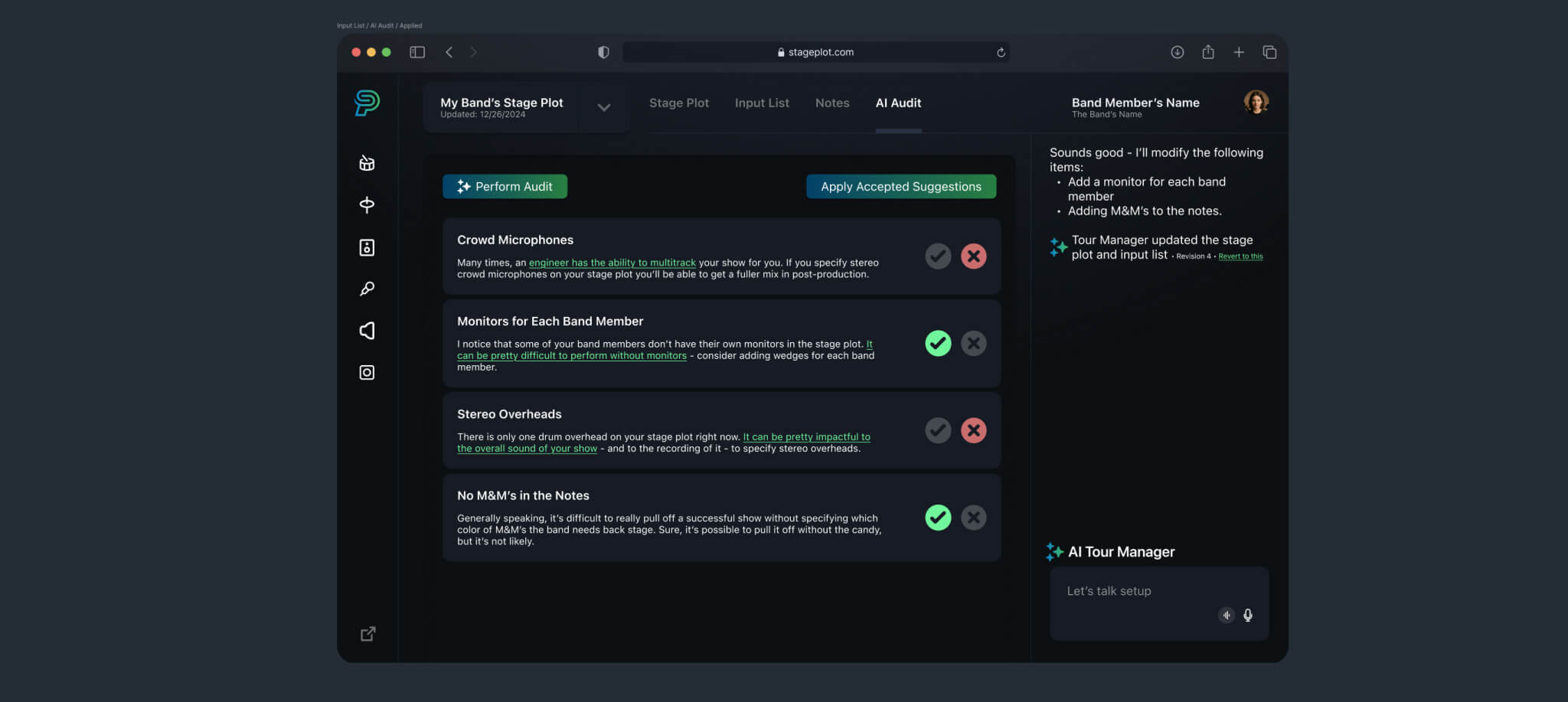
I moved away from the idea of a blank drawing board. A blank canvas is intimidating if you don't know the rules of the house. Instead, I focused on a system of smart scaffolding.
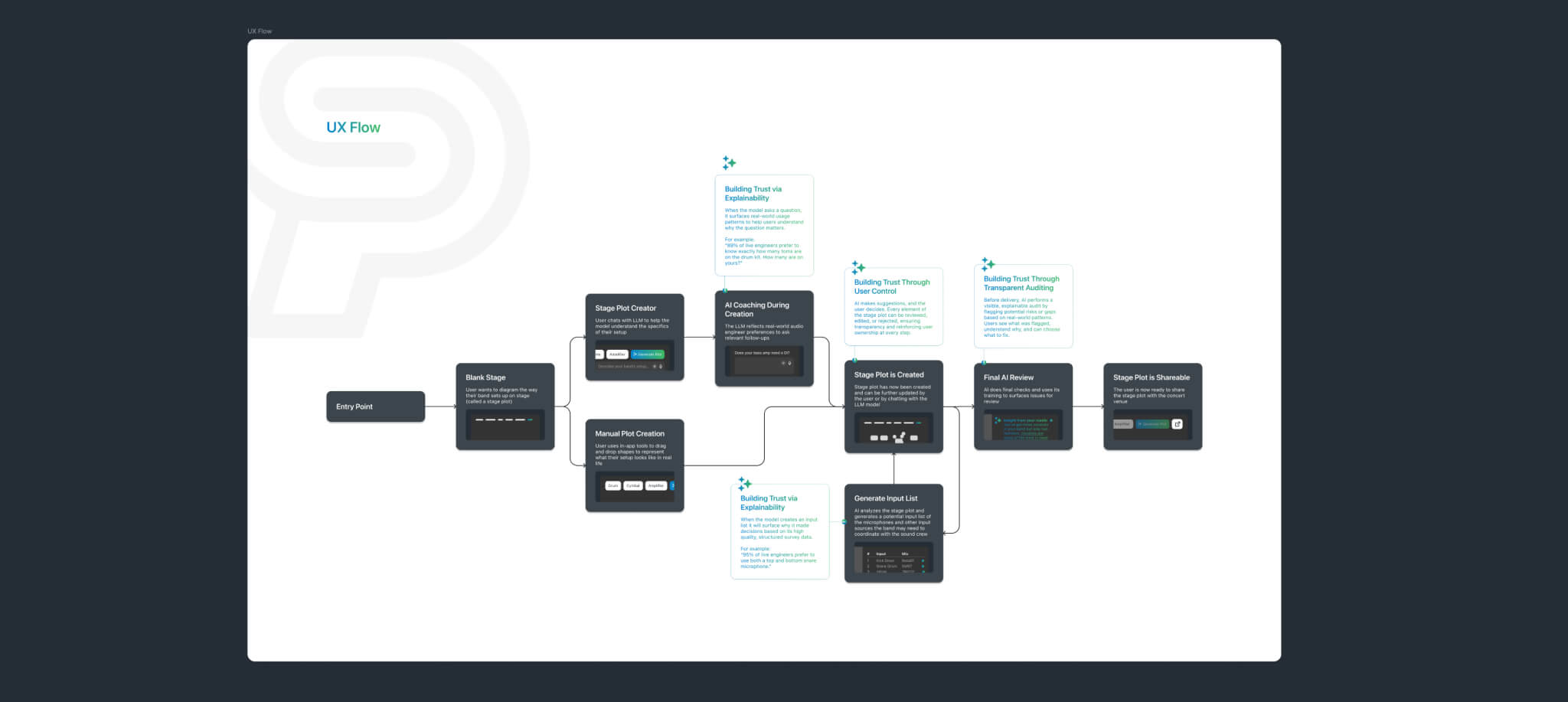
When a user adds an instrument, the system suggests the necessary inputs, power requirements, and monitor lines. It asks the questions a professional engineer would ask in a real-world soundcheck. I also focused heavily on the export. I made sure the final document looked like a high-end technical rider used by touring professionals. This gave the artist a sense of borrowed authority; they looked like they knew what they were doing, even if it was their first tour.
Why I was wrong about the design
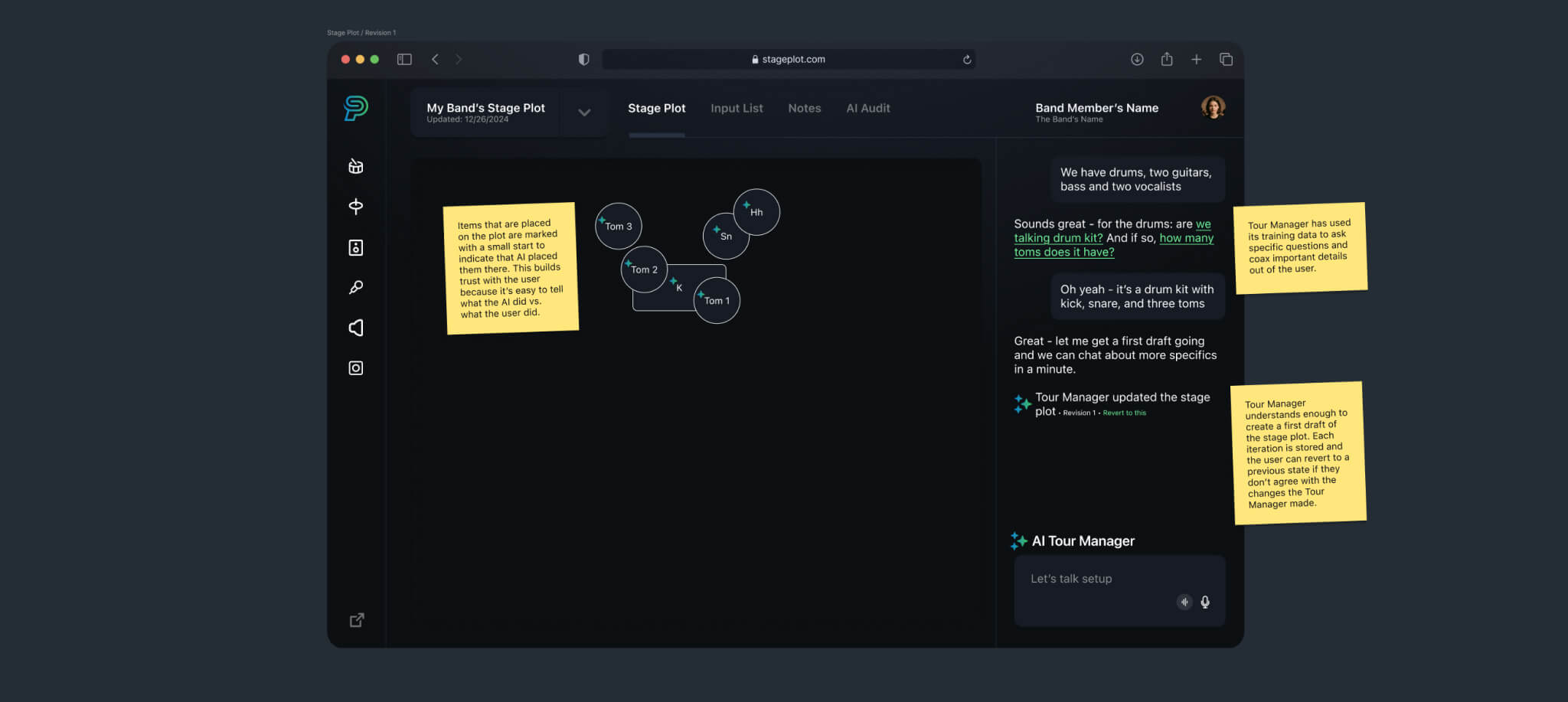
I have to be honest about a major mistake I made early on. I spent weeks designing a sleek, modern interface. I used custom icons for every instrument and a dark-mode aesthetic that looked beautiful on my high-resolution monitor in a brightly lit office.
"I learned that in high-stakes environments, utility is the only beauty that matters."
When I took the prototype into an actual venue, it failed immediately. The engineers were trying to read these plots on old tablets with cracked screens or printing them on cheap office printers that were low on ink. My custom icons were a blur. My dark UI was just a black smudge on a piece of paper.
I had to scrap the "designer-y" aesthetics and move to a high-contrast, blueprint-style layout. It was a humbling reminder that my job isn't to make things look cool—it's to make them work when things are stressful and the lighting is bad.
Moving forward
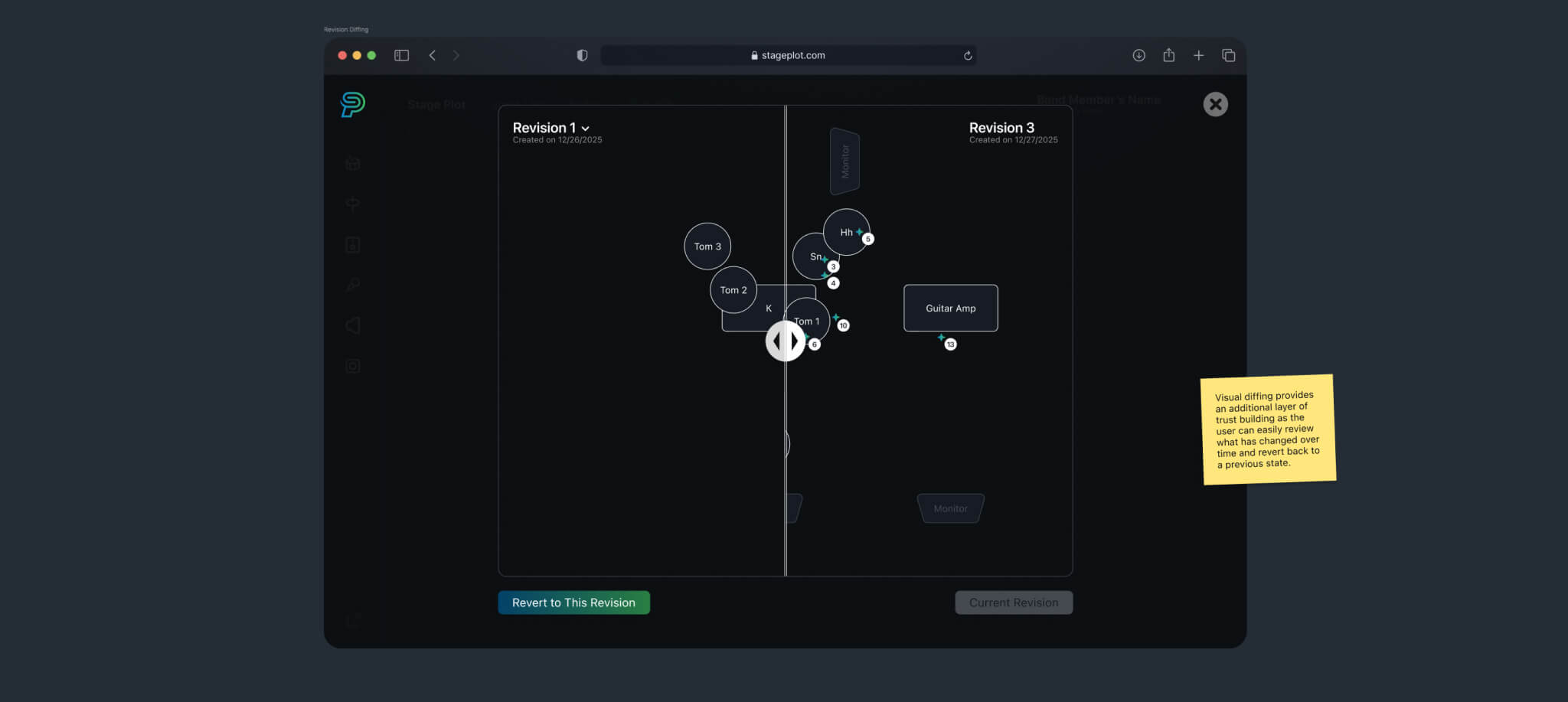
The tool solved the initial handshake, but it’s still static. The next step I’m exploring is how to handle the inevitable changes that happen on the road. If a band loses a member or adds a new synth mid-tour, the documentation needs to stay alive without creating more paperwork for the crew.
"I realized that musicians aren't trying to be difficult; they just don't know what they don't know."
View this project in Figma →