
 2023
After the Event
A case study from Guidebook, an event app, on customers who stopped renewing once their event ended. Ryan ran 14 interviews within a month of each event ending, to find what organizers needed afterward instead of launching a win-back campaign.
Growth at Guidebook · 5 min read
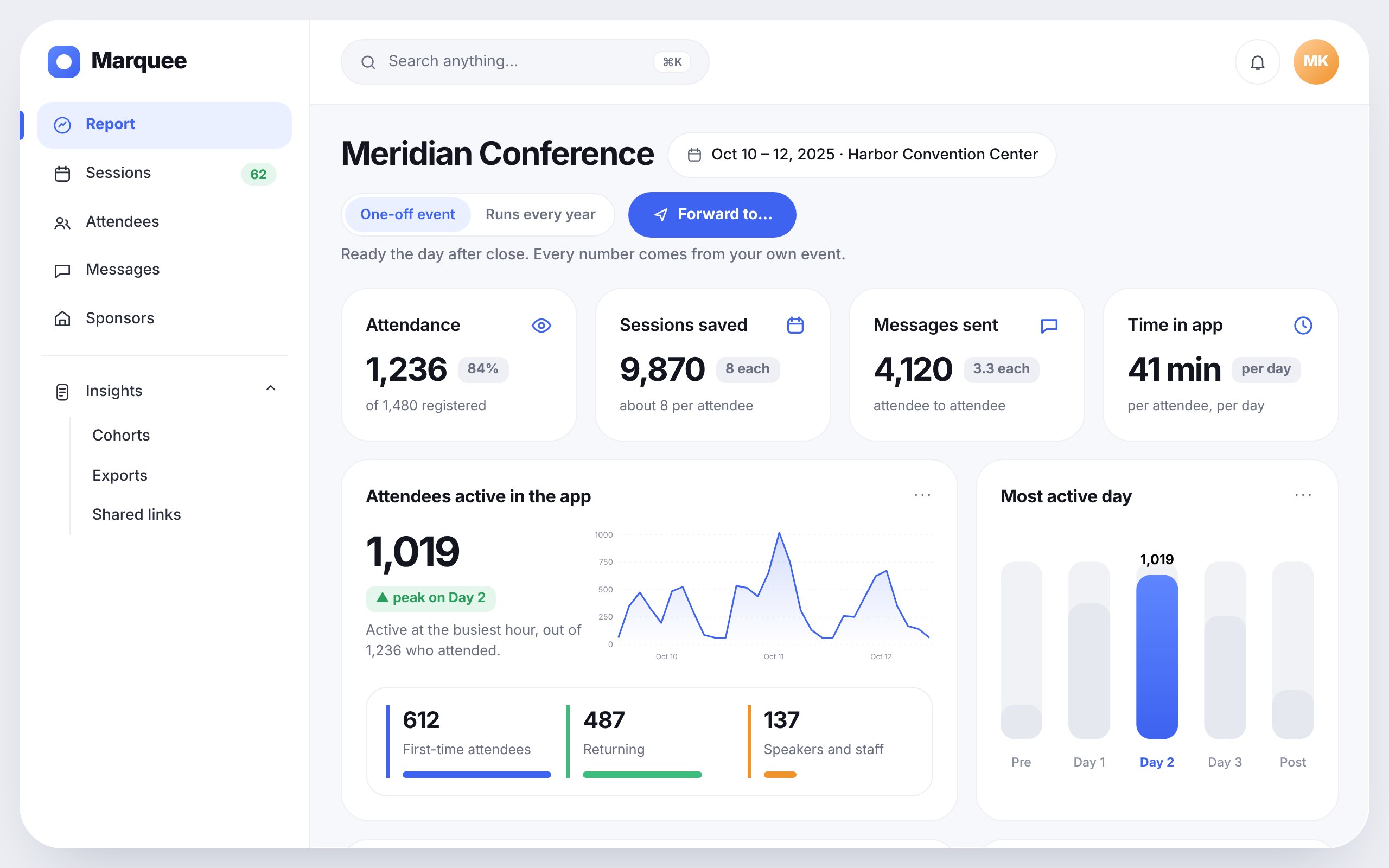
Sixty-one of the cancellations that spring said some version of the same thing. "Event's over." "Our conference ended." "We're done for the year." Across the quarter, that was the reason roughly two out of every three customers gave when they left and bothered to say why.
I read all of them in one sitting, in a spreadsheet, which is the only way to take in how repetitive they are. None of them were angry. That was the part that stayed with me. Nobody was leaving because the product failed. They were leaving because the thing they bought had a shelf life of about a week.
Guidebook makes event apps. An organizer buys one for a conference, a festival, a company offsite. We sold them an annual plan, but their need was event-shaped: huge for a few days, then nothing. The customer wasn't wrong to treat it that way. We had built a product whose value existed only in the days around the thing it was for.
The question under the question
The obvious response was a retention project. Win-back emails, a discount at renewal, a customer success playbook. All of it was reasonable, and none of it addressed the problem, which was that we had nothing to say to an organizer in the weeks after an event.
I thought the better question was what an organizer needs after their event that we're already positioned to give them. To find out, I did fourteen interviews over three weeks, each one scheduled within a month of an event ending, because I wanted to catch people while the event was still in their heads and not hand them a hypothetical.
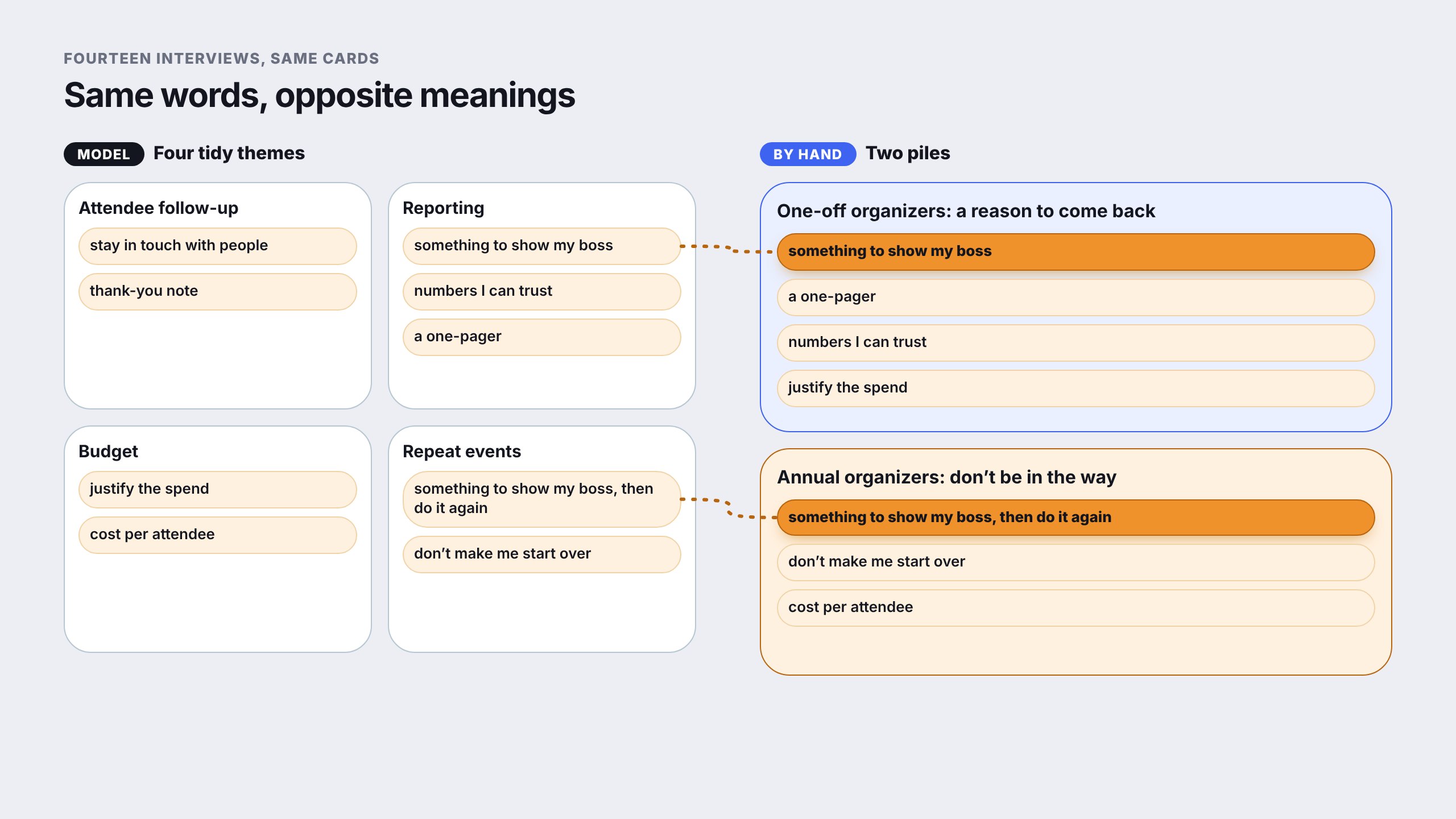
In March I took the notes, redacted them, and gave them to GPT-4 to cluster. It found four themes, and they were clean and plausible: reporting, repeat events, attendee follow-up, and budget. I didn't believe the grouping, though, because it merged two kinds of organizer I'd noticed in the room. Some ran one-off events: a product launch, a wedding-sized conference, a single festival. Others ran the same event every year, and wanted nothing from us except the ability to do it again without starting over. The model had put their comments in the same bucket because they used the same words. The words meant opposite things. The one-off organizer asked for "something to show my boss." The annual organizer asked for "something to show my boss, then do it again."
I split the notes by hand into two piles and the work got easier immediately. For one group we needed a reason to come back. For the other, we needed to not be in the way.
What 2023 had changed
A year earlier I would have framed this as an engagement problem. By 2023 that framing was wrong. Events were back, in person, in size, and the people running them were being asked by finance what the money had bought. Several organizers told me some version of the same thing: the event went well, and then their boss asked whether it was worth it, and they had nothing to hand over but a feeling.
We had the answer. Attendance, which sessions people saved, how many messages moved through the app, how long people stayed. It sat in our database and nobody had asked us for it, because nobody knew it existed. Organizers weren't leaving because the product was bad. They were leaving because they had no evidence it had helped them.
Two loops, and the one I cut
I settled on two ideas and killed a third.
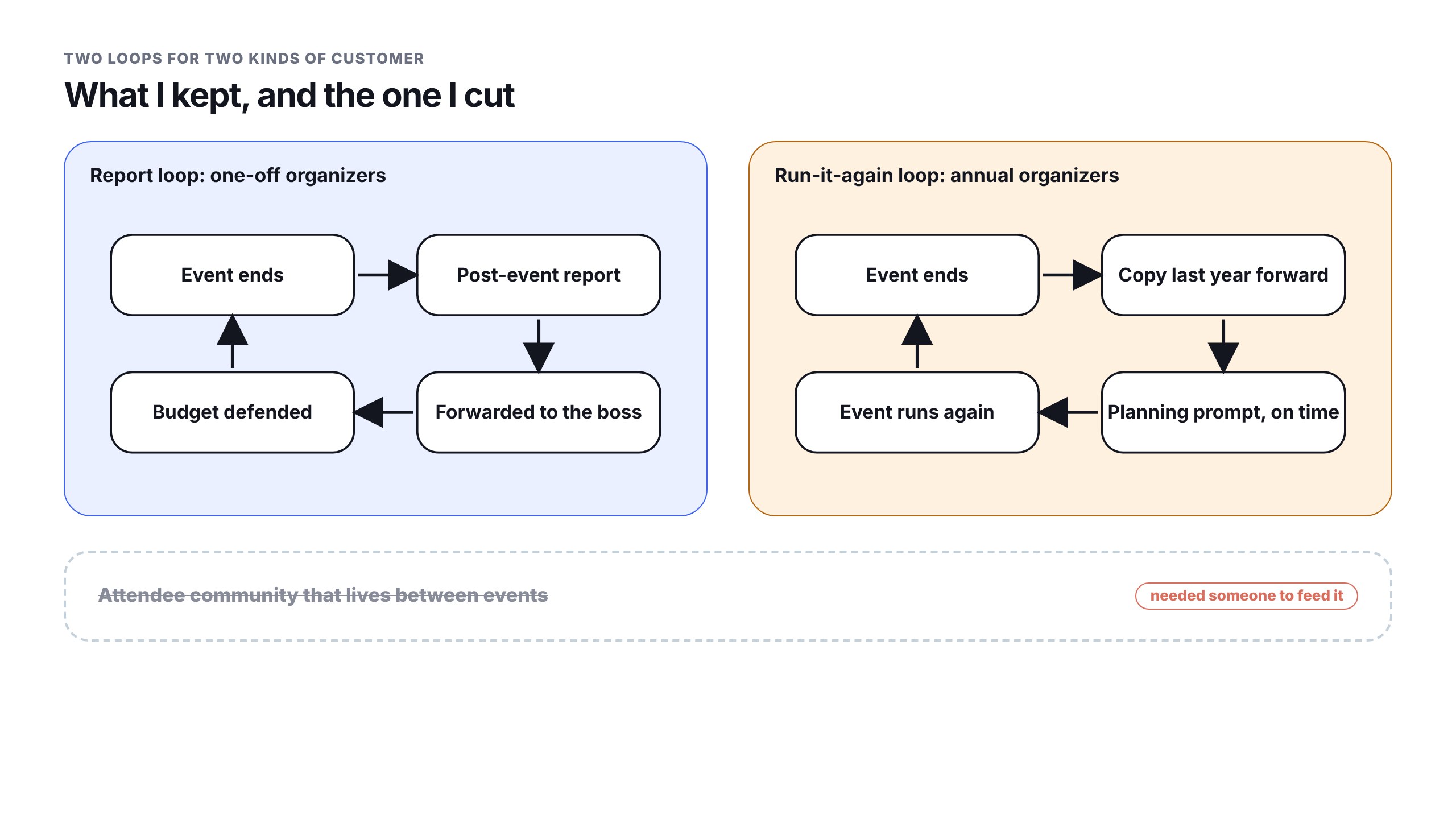
The first was a post-event report built for the person who has to defend the budget. It used their own numbers, and it was something they could forward to a boss without editing. The second was a way to run the event again: last year's structure, copied forward, with a prompt timed to when annual organizers usually start planning. They were different loops for the two kinds of customer, and I thought it was important not to pretend they were one.
The third idea was an attendee community that lived on between events. It was the idea I liked best. It was also the one that required someone to keep producing content for it, and no one at Guidebook, or at the customer, was going to do that. I took it out of the plan. It was a loss I felt for a few weeks.
The prototype that got forwarded
I built the report in code, scaffolded with an AI editor, using two real organizers' event data. I scheduled each demo for forty-eight hours after their event ended, because timing was the whole point. A report shown in a vacuum is a nice idea. A report shown to someone who is about to be asked what the event accomplished is a tool.
On the second call, the organizer stopped me partway through and said she was going to send it to her VP. She did, from the call, while I was still sharing my screen. I hadn't asked her to. I've thought since that the forward was the most useful piece of data in the whole project. Nobody forwards a thing they're being polite about.
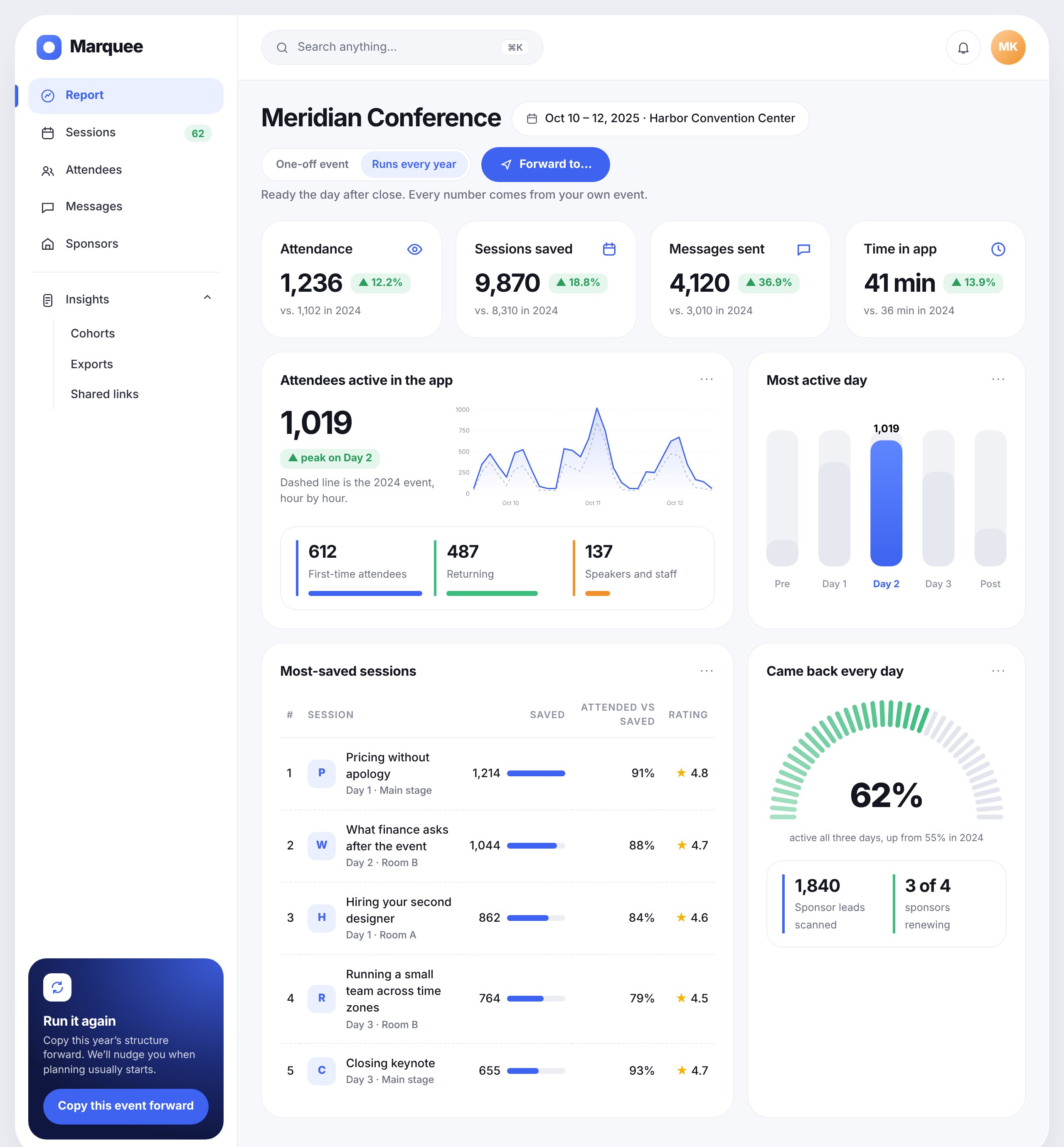
The prototype
How it shipped
Guidebook didn't have a way for customers to test builds before release, so we shipped the way we always did: behind a flag, to a handful of accounts who had said yes to early access. The report generated automatically a day after an event closed. I watched which accounts opened it, which ones forwarded it, and which ones came back to the product in the following weeks.
The role I played in this was different from the one I'd had a few years before. I built the retention model in a spreadsheet myself, with an AI assistant to check my formulas, and I decided which numbers we were allowed to be surprised by. Most growth design is that decision. Before the project we were surprised by churn after the fact. After, we were looking at report opens within forty-eight hours of an event, which is a number you can do something about.
What happened
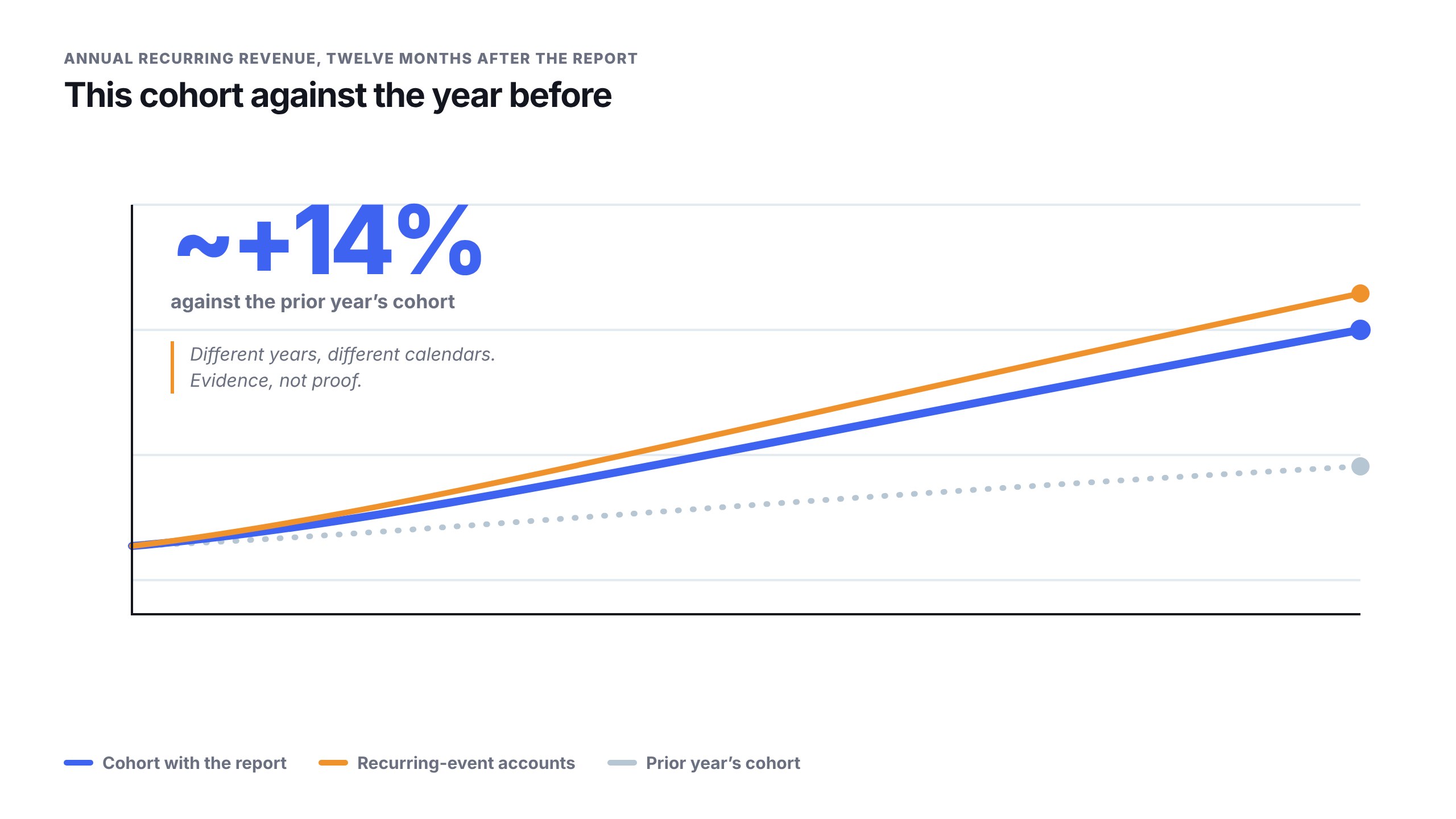
The cohort that received the report and the run-it-again prompt grew annual recurring revenue about 14% over the following twelve months, against the prior year's cohort. I should be careful about that number. It compares two groups of customers a year apart, with an economy and an events calendar that weren't identical, and I'd want it understood as strong evidence, not proof. Within the cohort, the effect was larger for recurring events than for one-off ones, which matched what the interviews had suggested. First-renewal churn also fell in the cohort, though that figure is the one I'd rather walk someone through than state in a sentence.
What I'd do differently
I'd have split recurring and one-off organizers in the experiment design from day one. I found the difference by reading notes, and then ran a single test that blended them for the first six weeks. I'd also have put forwarding on the dashboard from the start. It was the signal I trusted most, and I only counted it after the fact.
There's a version of this I'd defend in a room: that the model's four tidy themes were the most expensive thing in the project, because they were nearly right. The two piles I made by hand took an afternoon, and everything after depended on them.