
 2023–25
Seven Minutes
A case study on moving a small design team from handoffs to shipping code. Ryan counted seven one-off components per quarter outside the design system, and found engineers would welcome small design changes that came without surprises.
Changing how a small design team ships · 6 min read
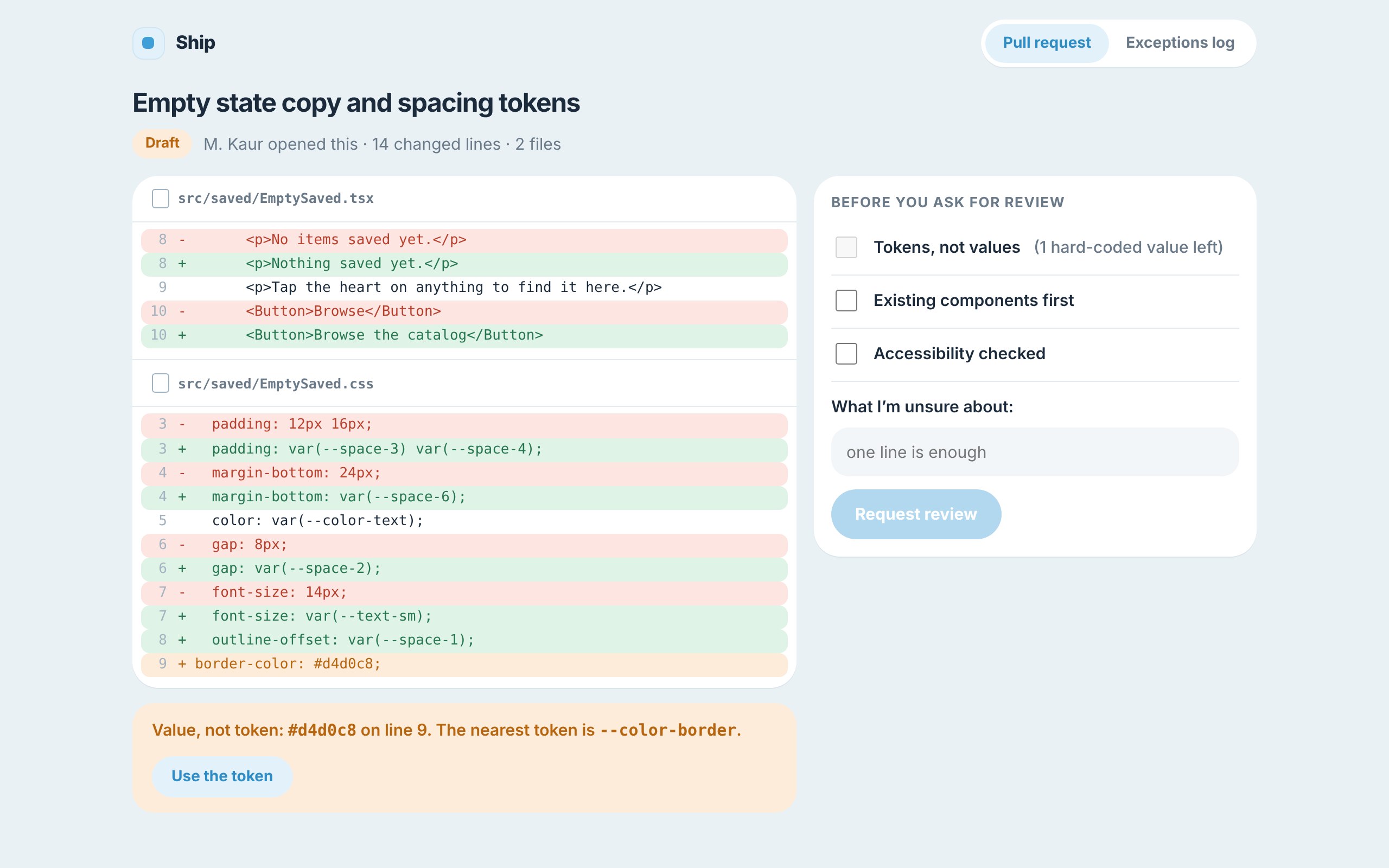
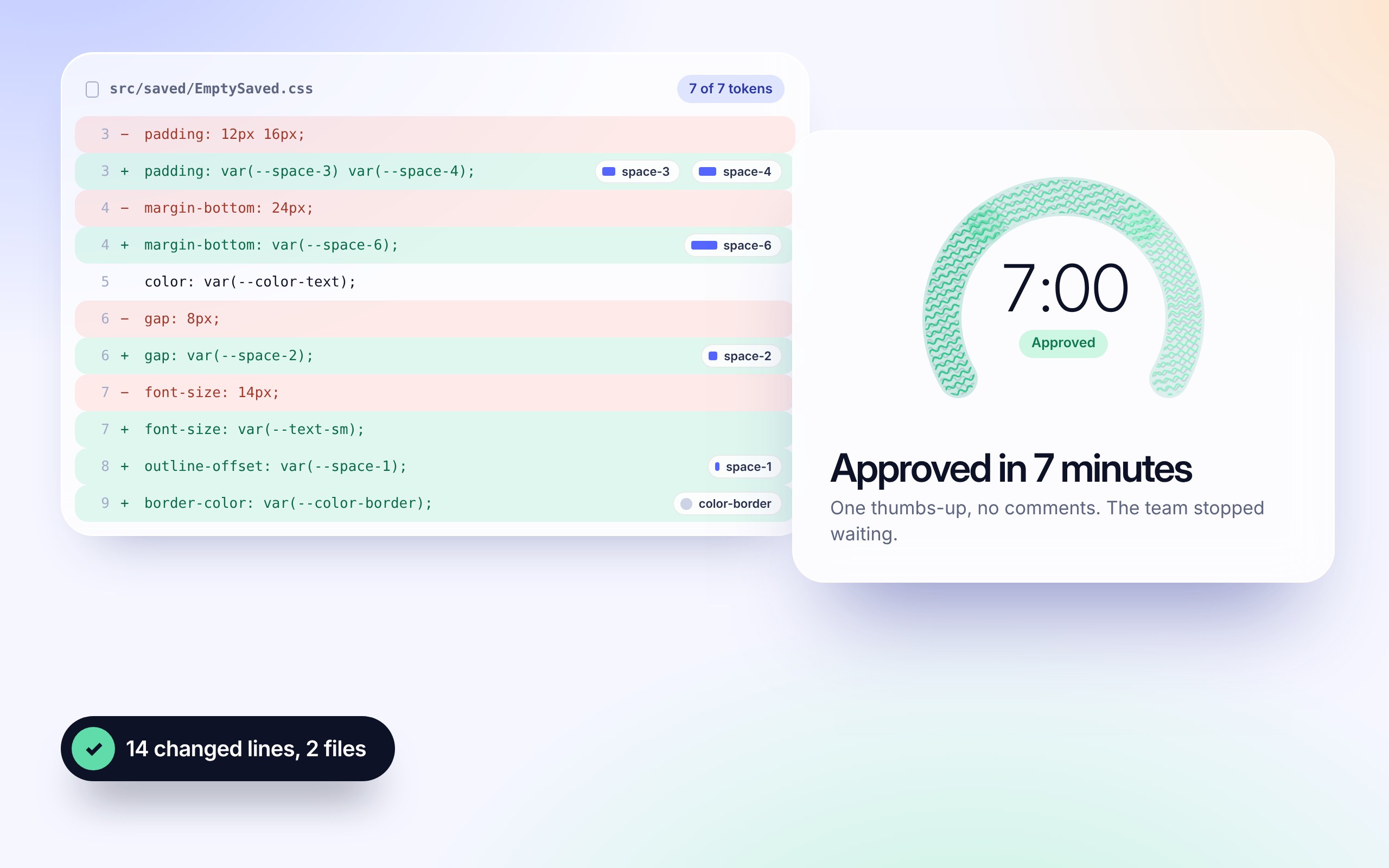
The first pull request one of my designers ever opened was approved in seven minutes.
It was a copy change and a token swap, fourteen lines. She had been on the team for two years and had never touched the repository. She told me afterward that she'd rehearsed what to say if an engineer pushed back, and that nobody had said anything at all. The approval came with a thumbs-up and nothing else. She read it as a small anticlimax. I read it as the moment our design team stopped waiting.
It took us most of two years to get there, and it started with an unglamorous count.
What we were actually losing
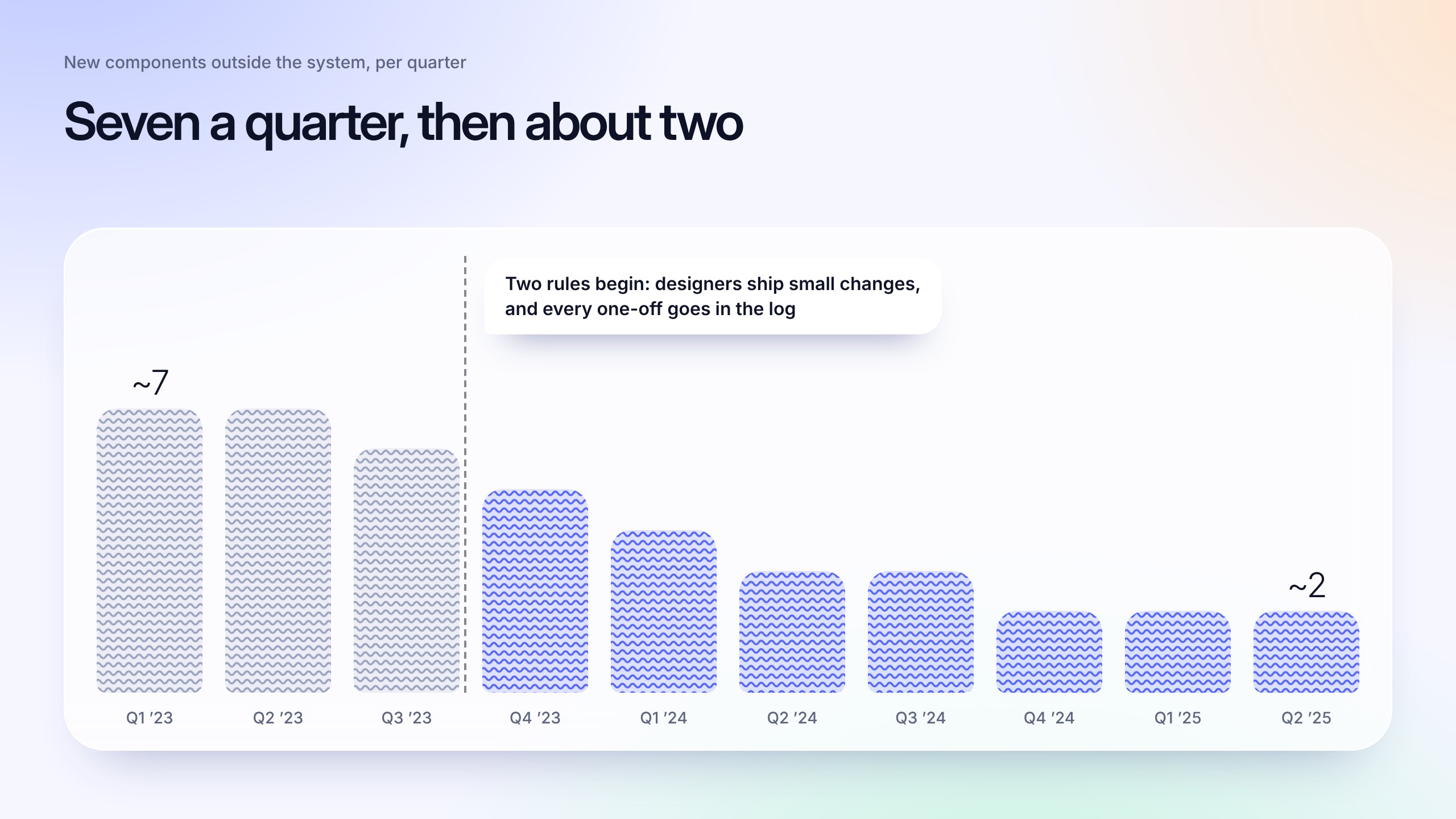
In early 2023 I went through the codebase and our Figma files and counted every component that existed outside the design system. There were seven new one-offs per quarter. Each had a reason. A deadline, a big customer, a PM who needed it for a launch. None of them was unreasonable alone. Together they were a design system slowly turning into a suggestion.
I also asked engineers how they felt about designers shipping changes, which I'd assumed they'd resist. They didn't. What they didn't want was a surprise: a large change with no warning from someone who hadn't seen the codebase. Several of them said they'd happily review a small change from a designer, provided it was small. That was a better answer than I had expected, and it changed my plan.
The handoff process had one expensive property I hadn't named until then. By the time a design arrived at engineering, the person who understood why every detail was the way it was had moved on, and the person implementing it was guessing. Small changes took about three weeks from approved design to live, mostly in waiting.
Two rules
I proposed two rules and expected an argument about both.
The first was that designers would ship small changes themselves, through the same review as everyone else. Copy, tokens, spacing, defaults. The tradeoff was real: engineers took on more review, and for the first few weeks everything was slower. I asked them to treat designer pull requests as ordinary ones, not courtesy ones.
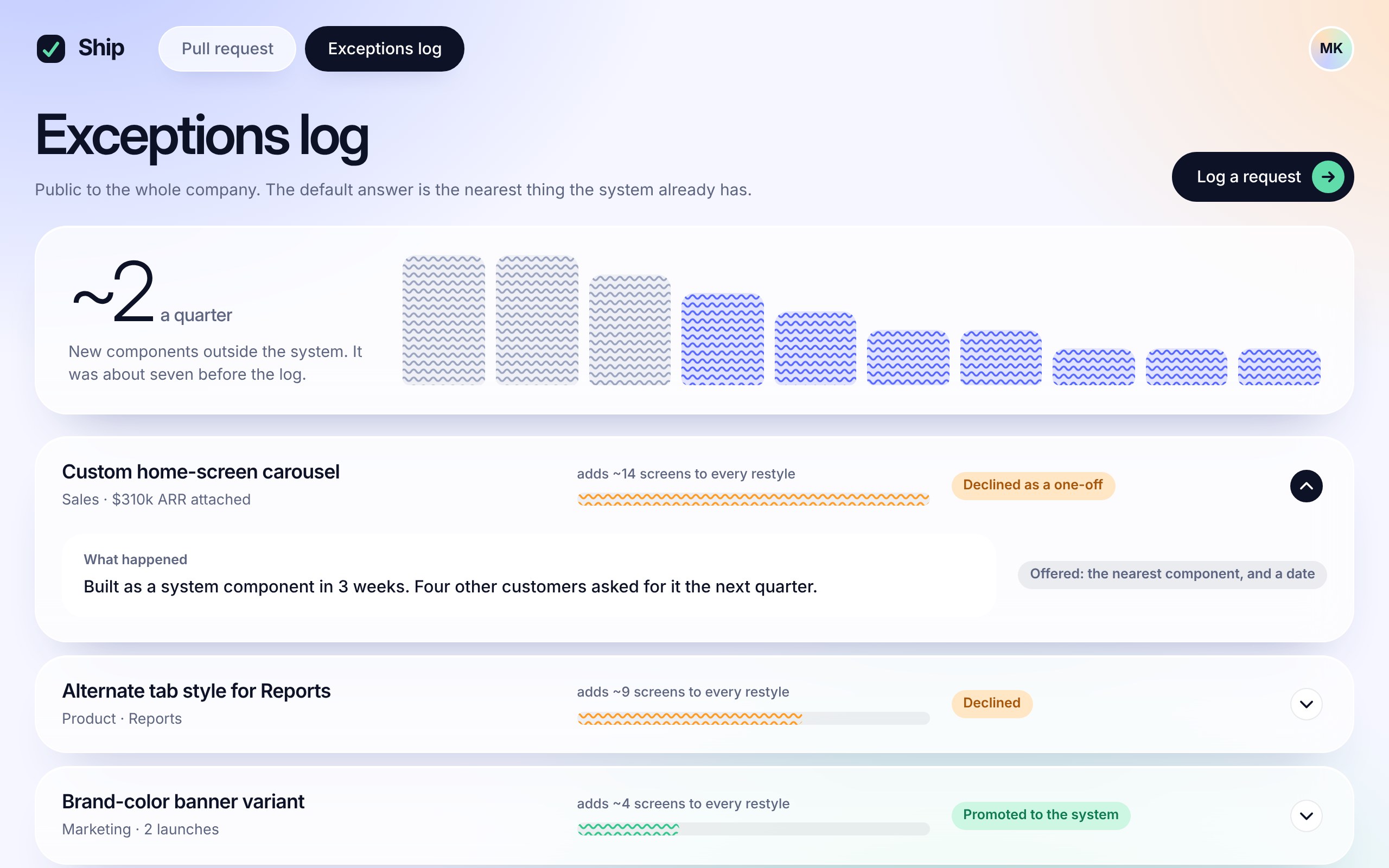
The second was a no-one-off rule. A request for a new component had to go through a short log, and the default answer was to offer the nearest thing the system already had. I kept the log public. The goal wasn't to win arguments. It was to make the cost of a one-off visible, so a product manager could see what saying yes would add to everyone else's workload.
I considered a design system council and rejected it. We were a small team. A council would have meant more process than the thing it governed.
The enabling work
Two pieces of tooling made the rules possible. In mid-2023 we moved our styles into Figma Variables, so tokens in design and tokens in code finally meant the same thing. In 2024 we put engineers on Dev Mode seats, so a designer's intent could be read from a file instead of reverse-engineered from a screenshot. Neither is exciting. Both removed the excuse that the design and the code couldn't be compared.
The harder part was the first month. A designer's first pull request is a small act of exposure, and I told people that mine would go first. I opened a change to a spacing token and left a note about what I was unsure of. It was approved with two comments. Then I asked the others to do one each by the end of the quarter. They did, and then they kept going.
The prototype
The no I had to say
A year in, the head of sales asked for a one-off. A large customer wanted a custom carousel on their home screen, and there was a contract conversation attached. I wasn't asked, exactly. I was told.
I said no, and offered the nearest component and a date for when I could build the carousel properly, as part of the system, if we decided it was worth it. I put the request in the log with the revenue number attached, so the decision would be made in daylight. It was a tense week. We ended up building the carousel properly, in three weeks, and four other customers asked for it in the next quarter.
I don't tell this story because I was right. I tell it because the log made the decision about evidence instead of mood, and that's the only reason it held. When I took the numbers to the executives, I didn't argue that one-offs were bad design. I showed what each had cost us in later changes. It's a more convincing argument, and it's easier to make when someone else has already counted.
Teaching it
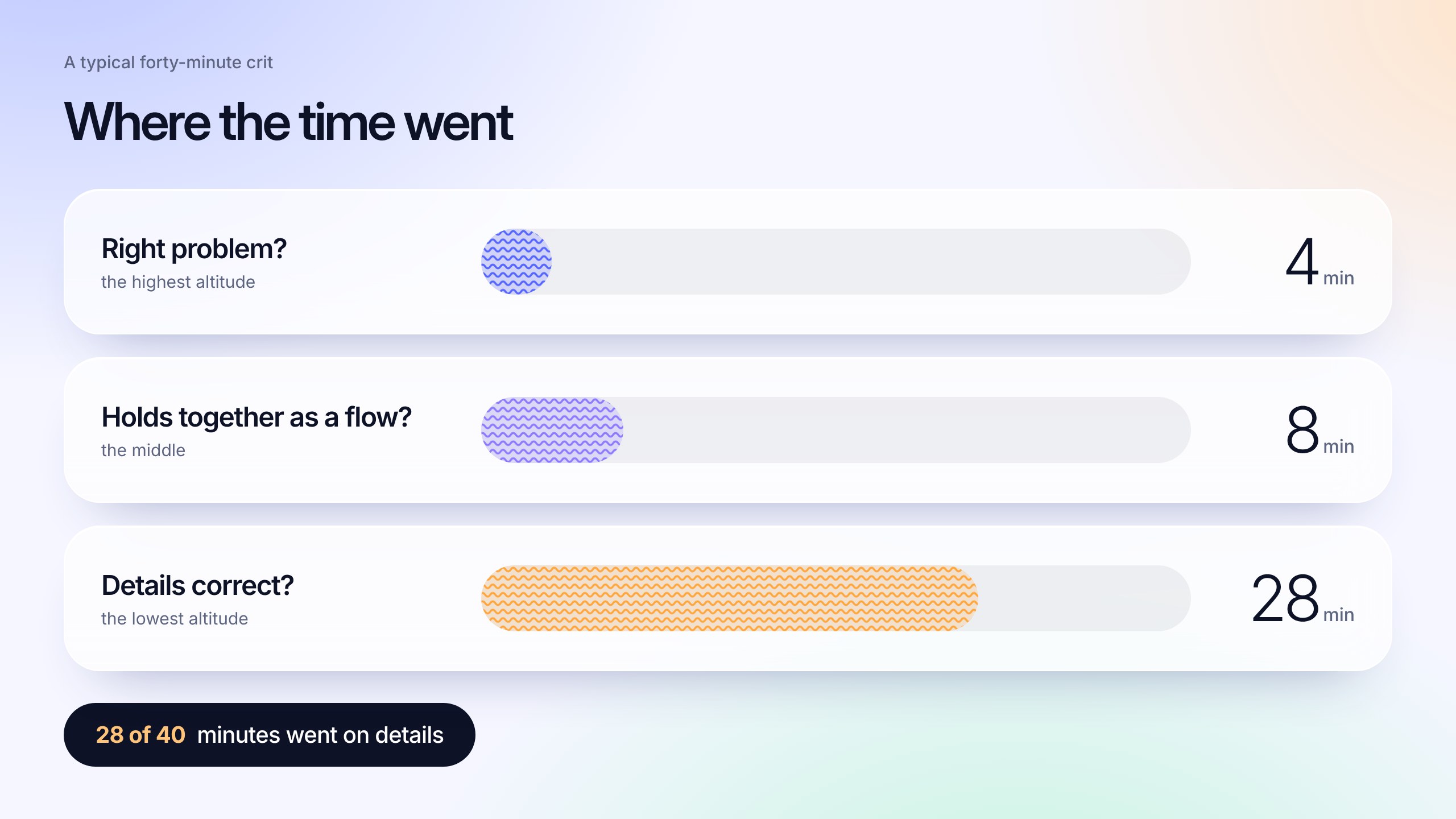
I changed how we ran crits. They used to be about whether a thing looked right. They became a conversation at three altitudes: does this solve the right problem, does it hold together as a flow, and are the details correct. Most crits spent forty minutes at the lowest altitude. I started naming which altitude we were on, and a lot of arguments turned out to be people disagreeing at different ones.
I also changed how I thought about leveling. When someone asked what it would take to move up, I stopped answering with a list of skills. I asked what they had shipped that was harder than last time, and what they had decided not to ship. The people who were ready tended to have answers to the second question that surprised me.
The tools got faster than the rules
By 2025, AI coding tools had made it easy for anyone on the team to produce a working change, including people who had never opened the repository. That was what we'd wanted. It also exposed what our process hadn't been designed for.
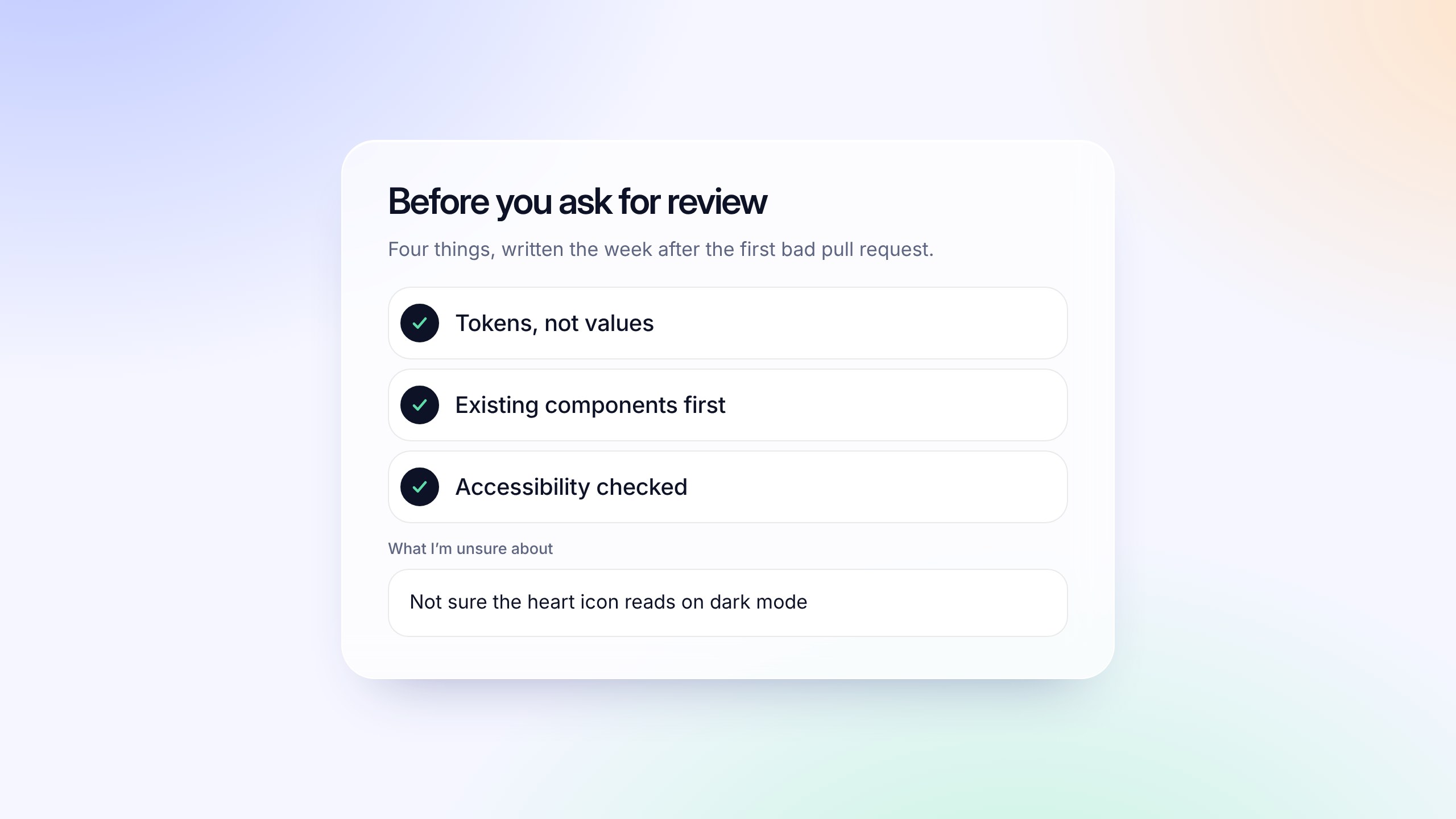
The first bad pull request came from a designer I trusted. It was clean, it worked, and it hard-coded a color that wasn't a token. The tool had done what she'd asked, and she hadn't known to ask for more. An engineer caught it, and nobody was embarrassed, but I recognized the shape of the problem: shipping had become easy enough that the review was now carrying the quality. Several weeks later I wrote a one-page checklist for designer pull requests: tokens, not values; existing components first; accessibility checked; and a sentence saying what you're unsure about. I'd rather a designer write that sentence than pretend to be certain.
The design role I'm describing isn't the one I trained for. A few years ago my work ended where the file did. Now it extends into whether the change is correct, reviewable and safe, and it asks designers to hold standards that used to belong to engineers. That's more work, and I think it's the right trade, as long as someone is deliberately deciding which of the new cheap things are worth making.
What happened
One-off components fell from about seven per quarter to about two. Small changes that used to take three weeks from approved design to live took about five days. Both numbers are from the repository and the log, not from surveys. The team's own sense of it was different: people said they felt they had more say in what shipped, and that, more than the numbers, was the thing that kept it going.
What I'd do differently
I would have taught the juniors to ship earlier. I waited until the system was clean, which was a mistake. A pull request is a better teacher than a workshop, and the new designers were the ones with the most to gain.
I'd also have written the review checklist before the AI tools arrived, not after the first mistake. The rule I'd pass on to anyone doing this: build the guardrails the week you turn the tool on.