
The Backlog
A case study and prototype of Juneau, a podcast app Ryan built to work like radio: you pick stations, not episodes. The study argues the one decision worth asking for happens once, at setup, rather than on every screen.
Juneau, a podcast app organized as radio stations · 4 min read
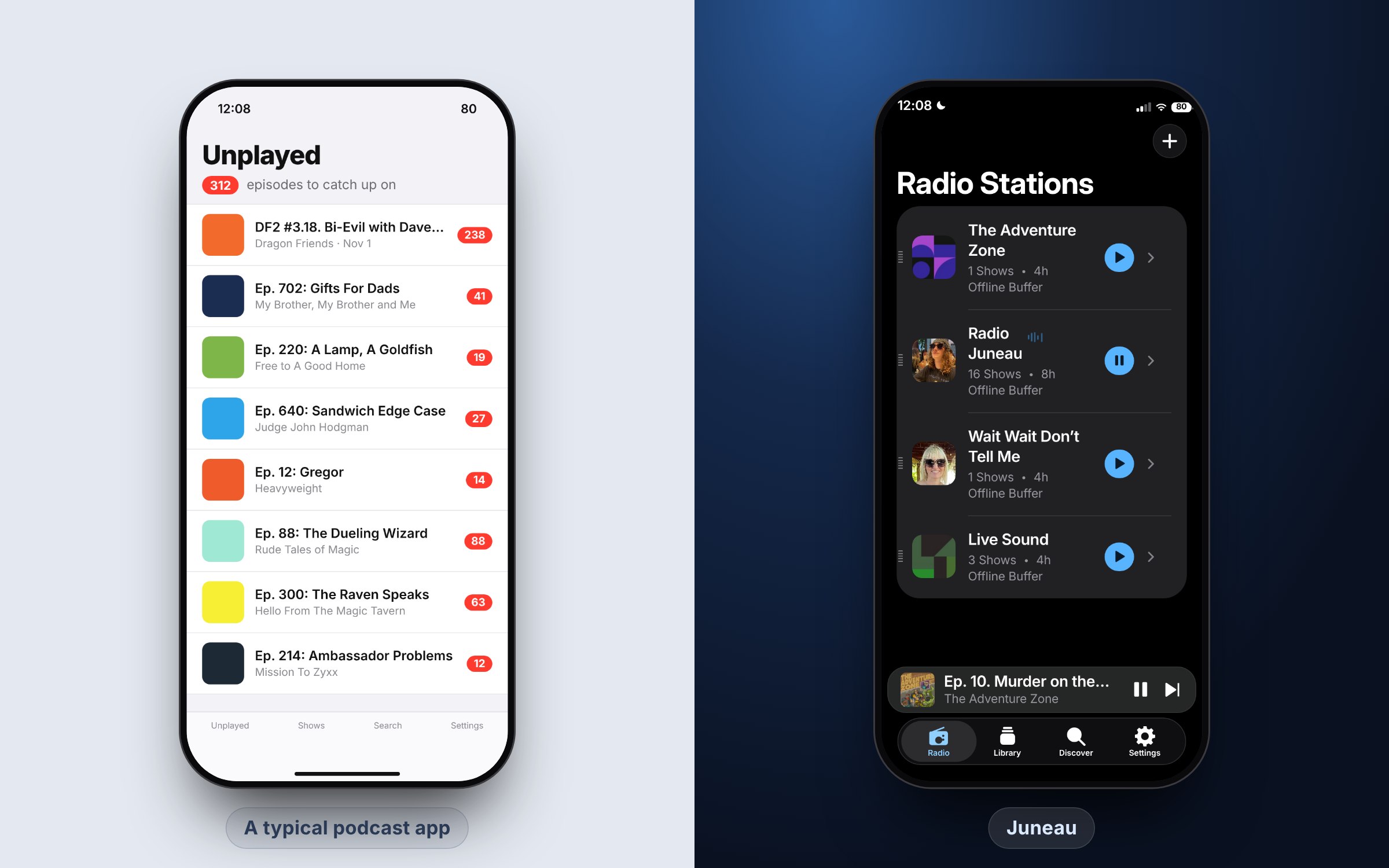
I had 312 unplayed episodes across forty shows, and I'd stopped opening my podcast app.
The number wasn't a discipline problem. Every podcast app I'd used was an inbox with a play button: you subscribe, episodes arrive, and the app shows you a count that only goes up. I stopped listening to shows I loved because opening the app felt like checking email.
What I wanted was radio. Something I could turn on while driving, doing dishes or walking, that would keep going and already know what came next. I built Juneau to work that way.
The reframe
The problem with podcast apps isn't discovery or playback. It's that every screen asks you to choose an episode. That's the wrong decision to ask for, ten times a day, from someone whose hands are full. The decision worth making happens once, at setup: which shows belong together, and what should happen with the ones I'm behind on.
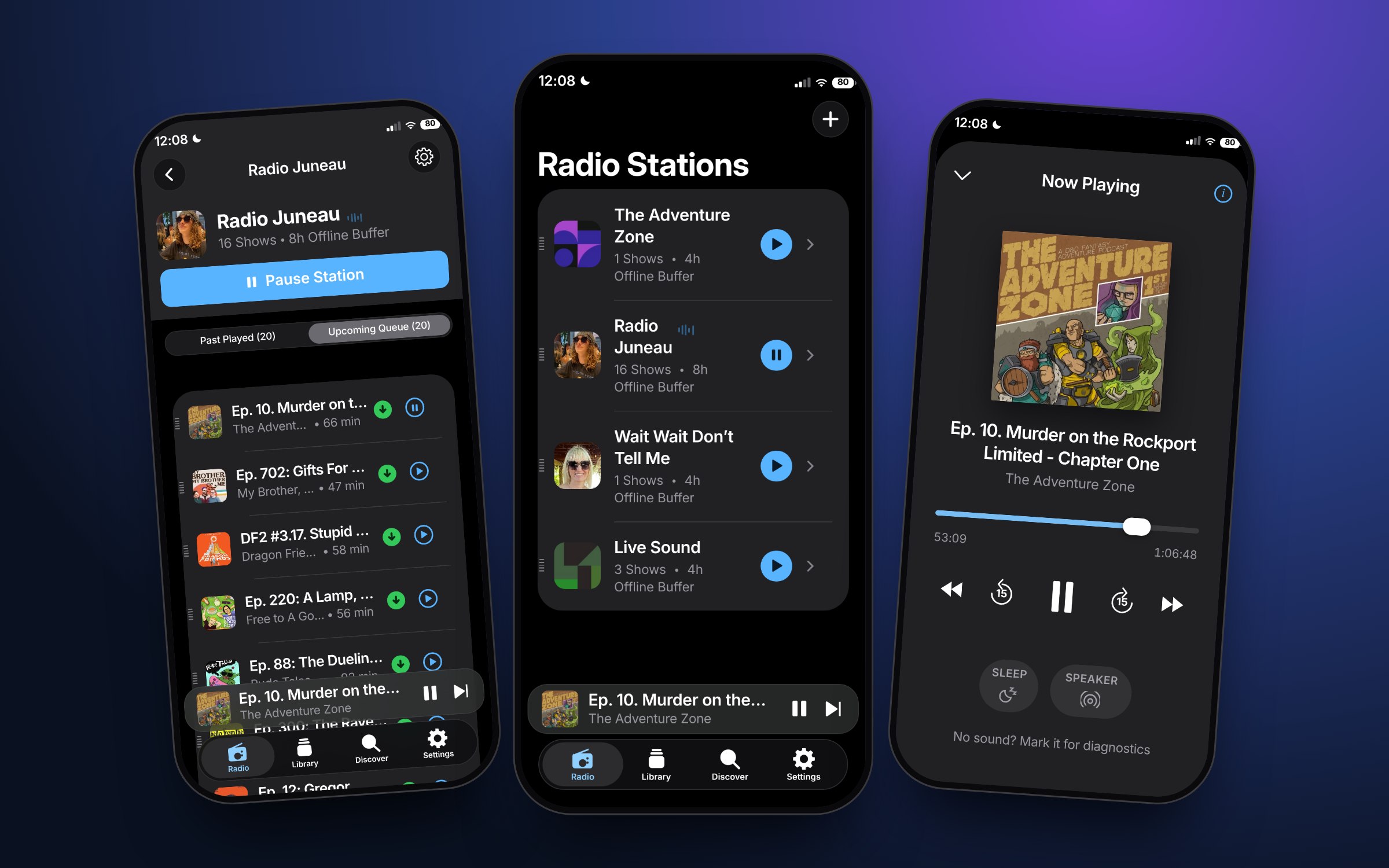
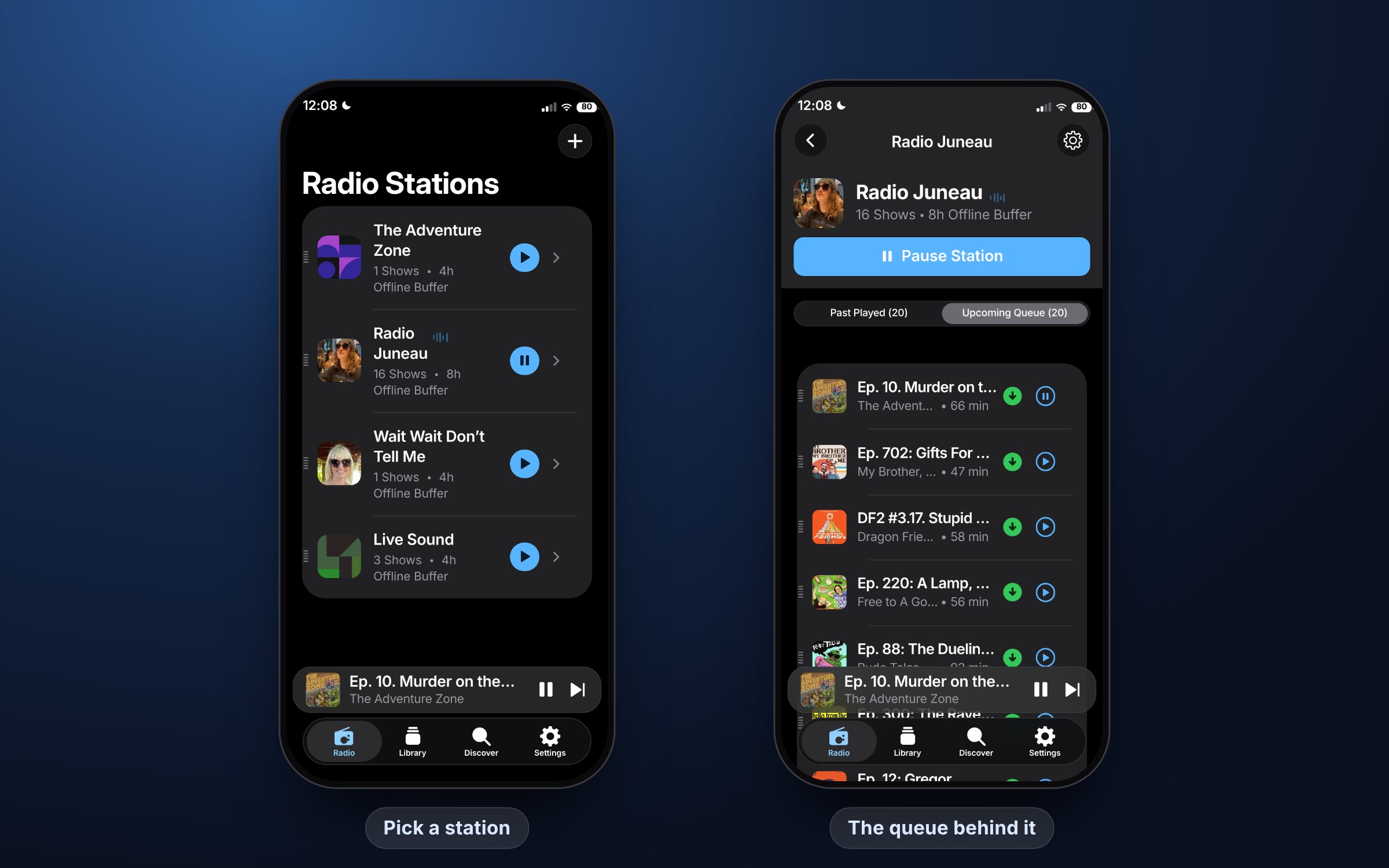
So Juneau is organized around stations. A station is a named group of shows with its own rules, and you press play on it. The Adventure Zone is a station of one show, played from the first episode in order. Radio Juneau is sixteen shows I'm happy to hear in any order. There's no unplayed count anywhere in the app.
Decisions, and what I gave up
The first decision was stations instead of a queue. A queue is something you maintain. A station maintains itself: it knows which shows feed it and keeps the next few hours ready. What I gave up is precision. You can't line up the exact episode you want next. You can still open the library and play one directly, but the app doesn't make that the main path, and a few power listeners told me so.
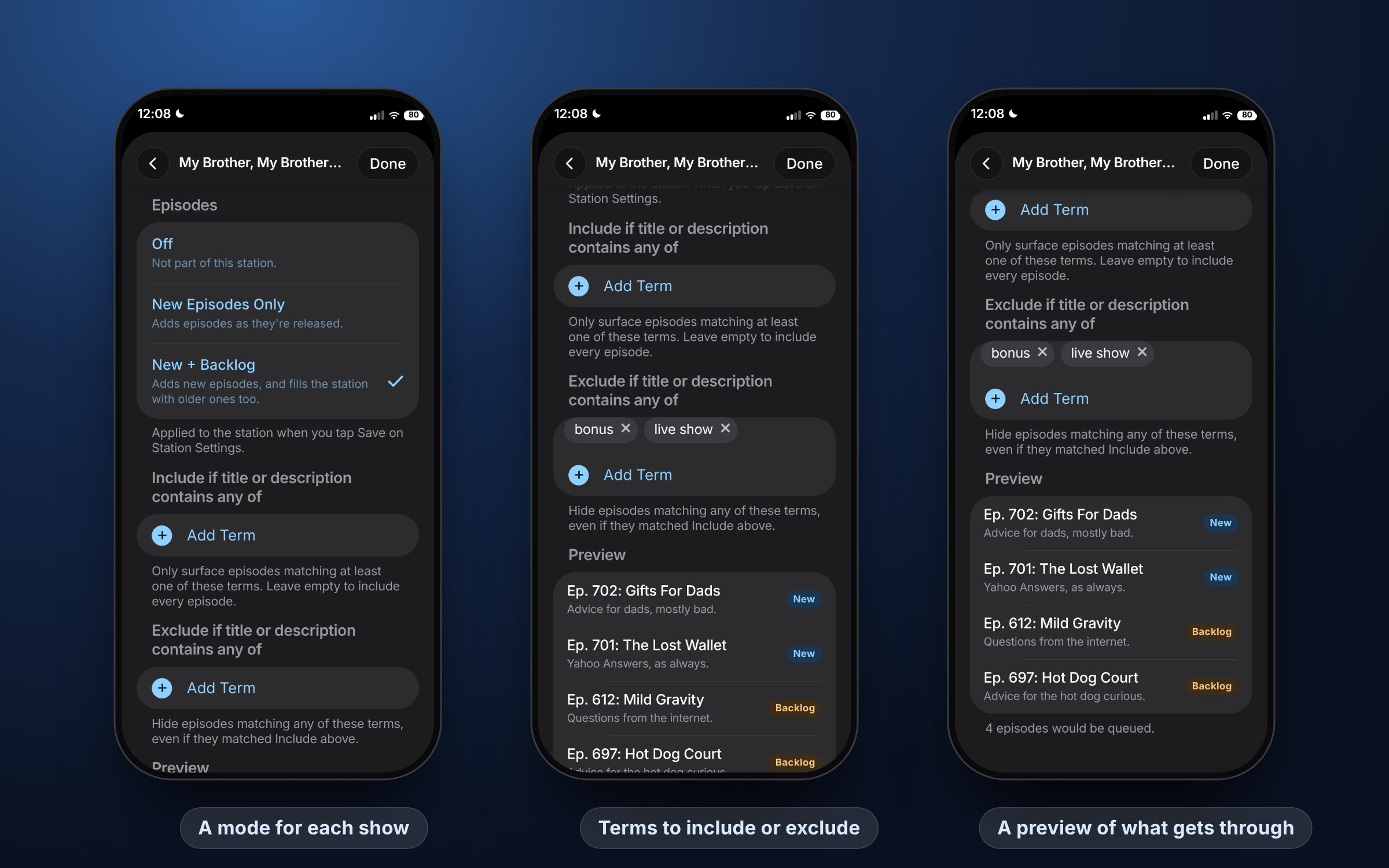
The second decision was to make the backlog a setting on a show, not a pile. Every show in a station is Off, New Episodes Only, or New + Backlog. New episodes go to the top as they're released. In Backlog mode, older ones fill in behind them, so a show you're behind on gets quietly heard instead of turning into a number. The cost is that old episodes now play without being chosen one by one. That was the point, but it needed a way to cut. Each show takes include and exclude terms, matched against titles and descriptions, with a preview of what the rule would let through. "Exclude: bonus, live show" removed most of what early testers complained about.
The third was to measure the offline buffer in hours. My first version asked for a number of episodes, and nobody could answer. People could answer how long their drive was. Each station now keeps 4, 8 or 24 hours downloaded ahead of time, so playback doesn't break when you lose signal. Cellular is off by default, and the settings say what the buffer costs in storage.
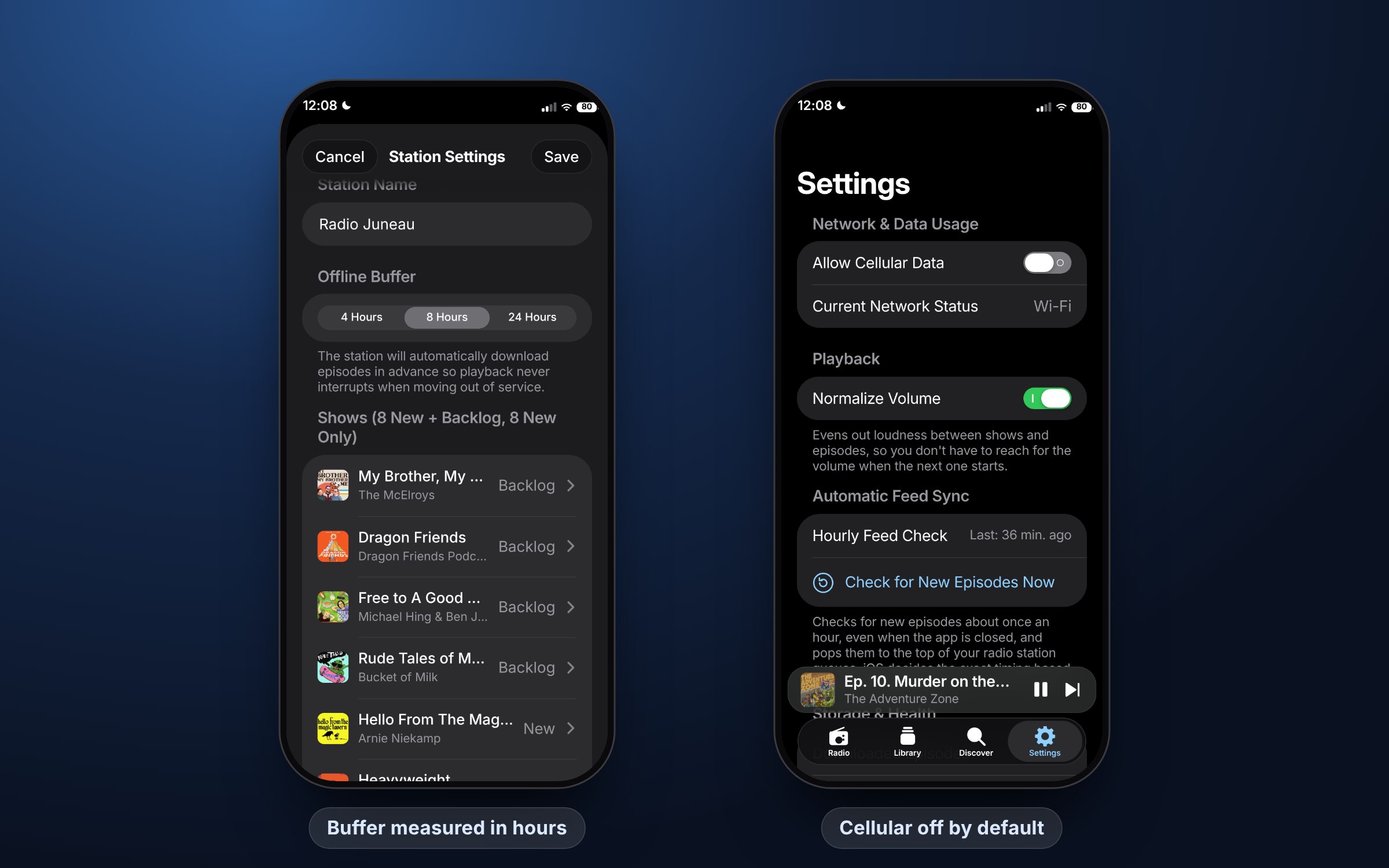
The fourth was to be honest about background updates. The app checks feeds about once an hour, even when it's closed, and puts new episodes at the top of the right station. iOS decides the exact timing, so the settings screen says so, shows when the last check ran, and offers a button for people who don't believe it.
How it was built
I built the first version in about four weeks in early 2026, with an agentic coding tool doing most of the typing while I decided what to build and what to refuse. I prototyped the station list and the show settings in a browser first and used them for a week before writing the app. It's native iOS, in Swift, because station playback has to survive the phone locking, the car taking over and the network dropping, and those are platform behaviors you can't fake.
Nothing in the prototype below connects to real feeds. It has a small catalog of shows and episodes, but the mechanics are the app's: tap a station and it plays, change a show's mode, add a term and watch the preview change.
The prototype
The thing that didn't work
My first version tried to guess for you. A "For right now" station was assembled from the time of day and what I'd played at that hour. It was clever and it unsettled people. One tester said it felt like being watched at the gym. Nobody wanted the app to know when they commuted. I took it out. A station is only what you build, and the app doesn't guess.
The beta
I ran it through TestFlight with 24 people for five weeks, starting in March. Some were heavy podcast listeners and some barely listened, because I wanted to know whether stations held up for people with no backlog to be ashamed of. They did. Several heavy listeners said, unprompted, that it was the first podcast app that hadn't made them feel behind.
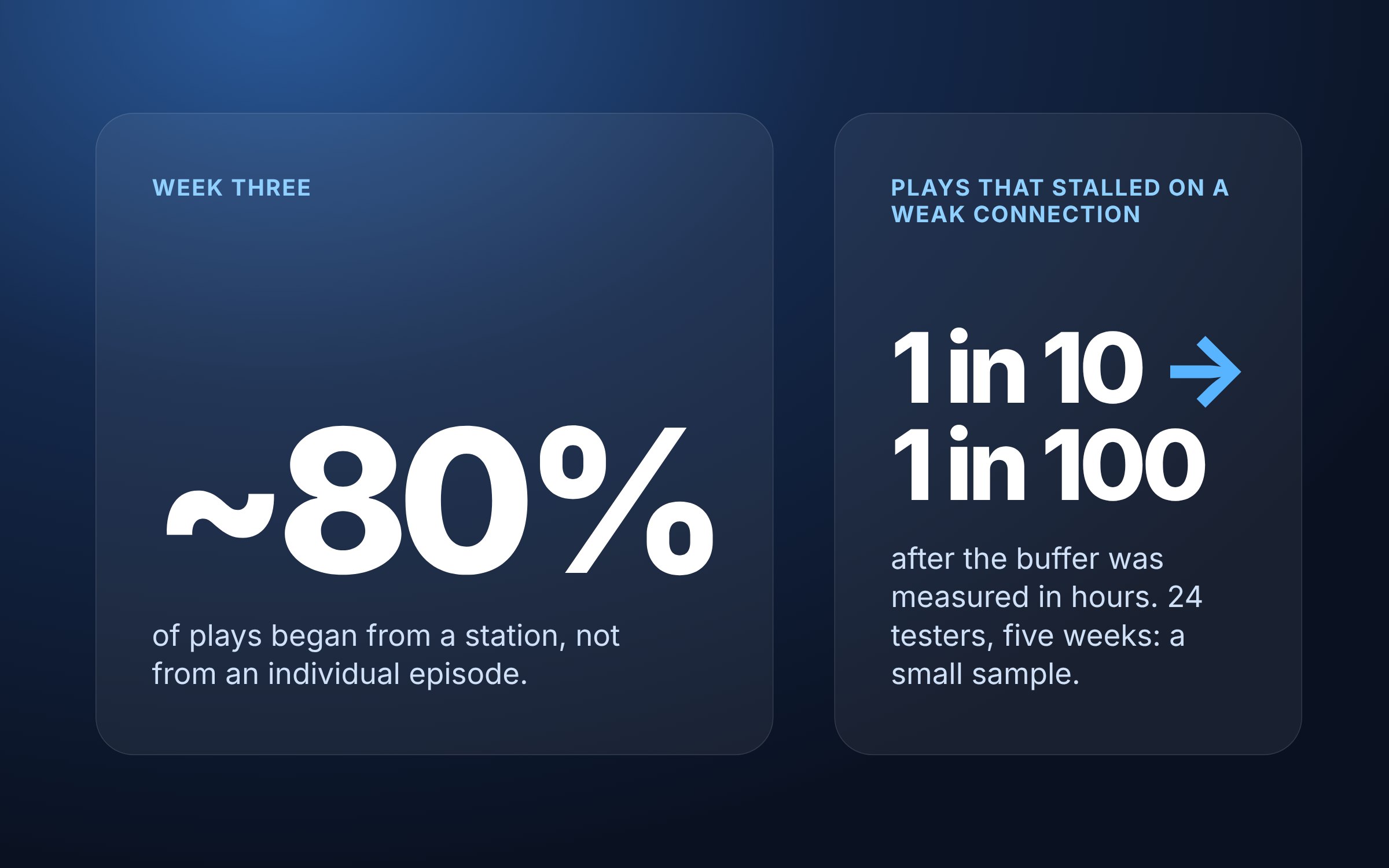
I watched two numbers. By week three, about 80% of plays started from a station, not from an individual episode, which meant most people were using what the app was built around. And I counted plays that stalled on a weak connection. In the first build, before the buffer was measured in hours, it was roughly one in ten. After, it was about one in a hundred. I'm not going to claim more than that from 24 people.
What I'd do differently
I'd make play order a setting on each show from the start. Backlog mode plays oldest first, which is right for a serial and wrong for a news show, and I used include and exclude terms to patch around it. It's still on the list.
I'd also build the preview first. It arrived in the second week of the beta, after testers had spent days writing exclude terms blind and guessing at what they did.
The app shipped to the App Store in the spring. I use it every day. I couldn't tell you how many episodes are unplayed. Nothing in the app keeps count.