
Where I Stop Trusting the Tool
An essay on how Ryan's work with AI tools has changed since 2023, and the rules he has kept. The first rule he learned: AI is very good at producing the answer that looks right, so he checks its work against the evidence himself.
How my work has changed since 2023, and the rules I’ve kept · 3 min read

I've changed how I work three times in three years, and each time it has felt less like learning a tool and more like learning a new job.
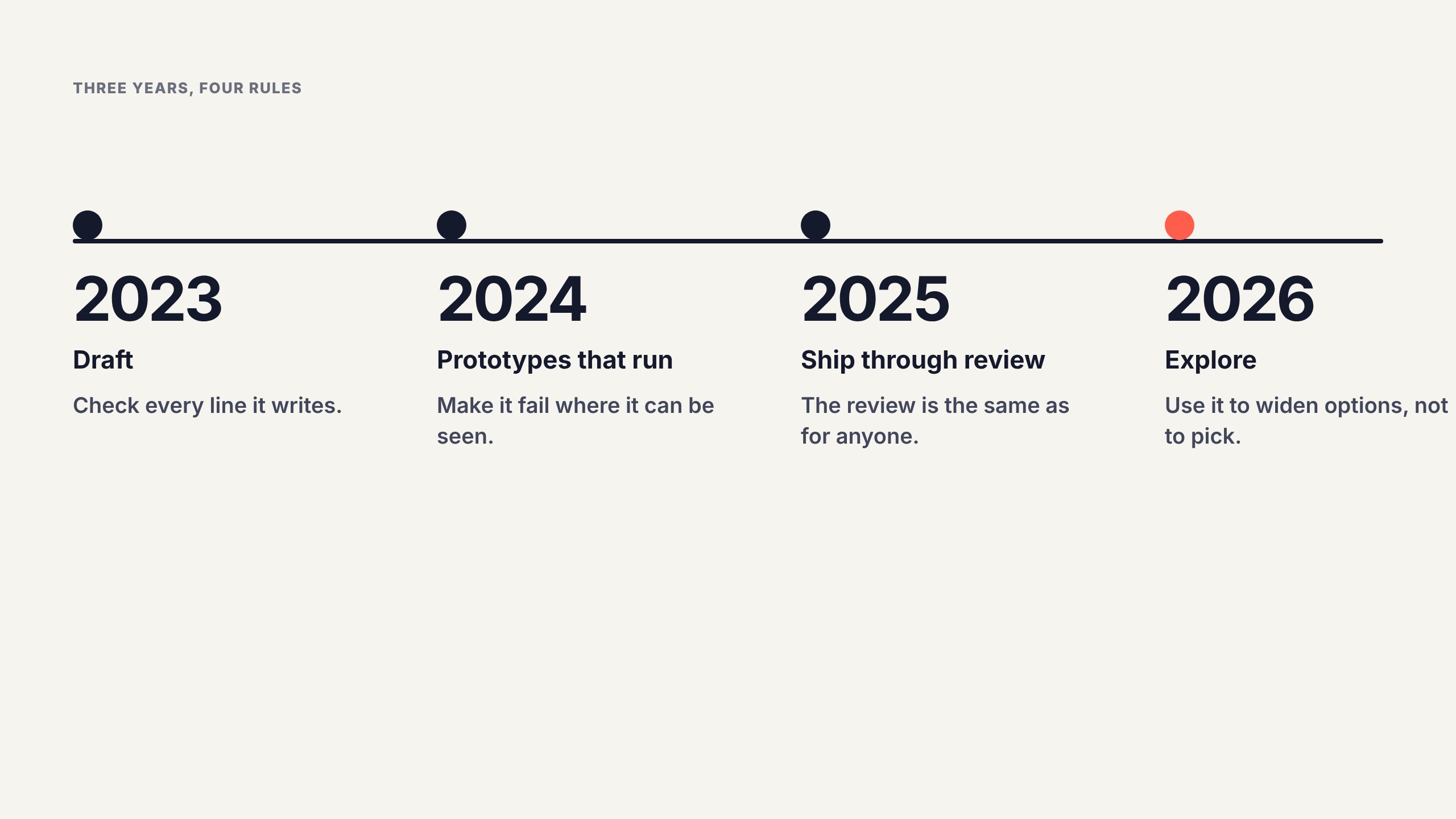
2023: the first draft
In early 2023 I used a chat model as a fast, tireless junior. I gave it interview notes and asked it to cluster them. I gave it a spreadsheet formula I couldn't remember and asked it to fix it. I used it to scaffold small prototypes in code, which saved me hours of setup and left me with something I could put in front of a customer within a day.
The rule I learned, early, was that it's very good at producing the answer that looks right. Clustering interview notes, it merged two kinds of customer whose comments sounded alike and meant opposite things. I only caught it because I'd been in the room. I decided then that anything a model produces from customer evidence gets treated as a list of things to check, never as a finding.
2024: prototypes that run
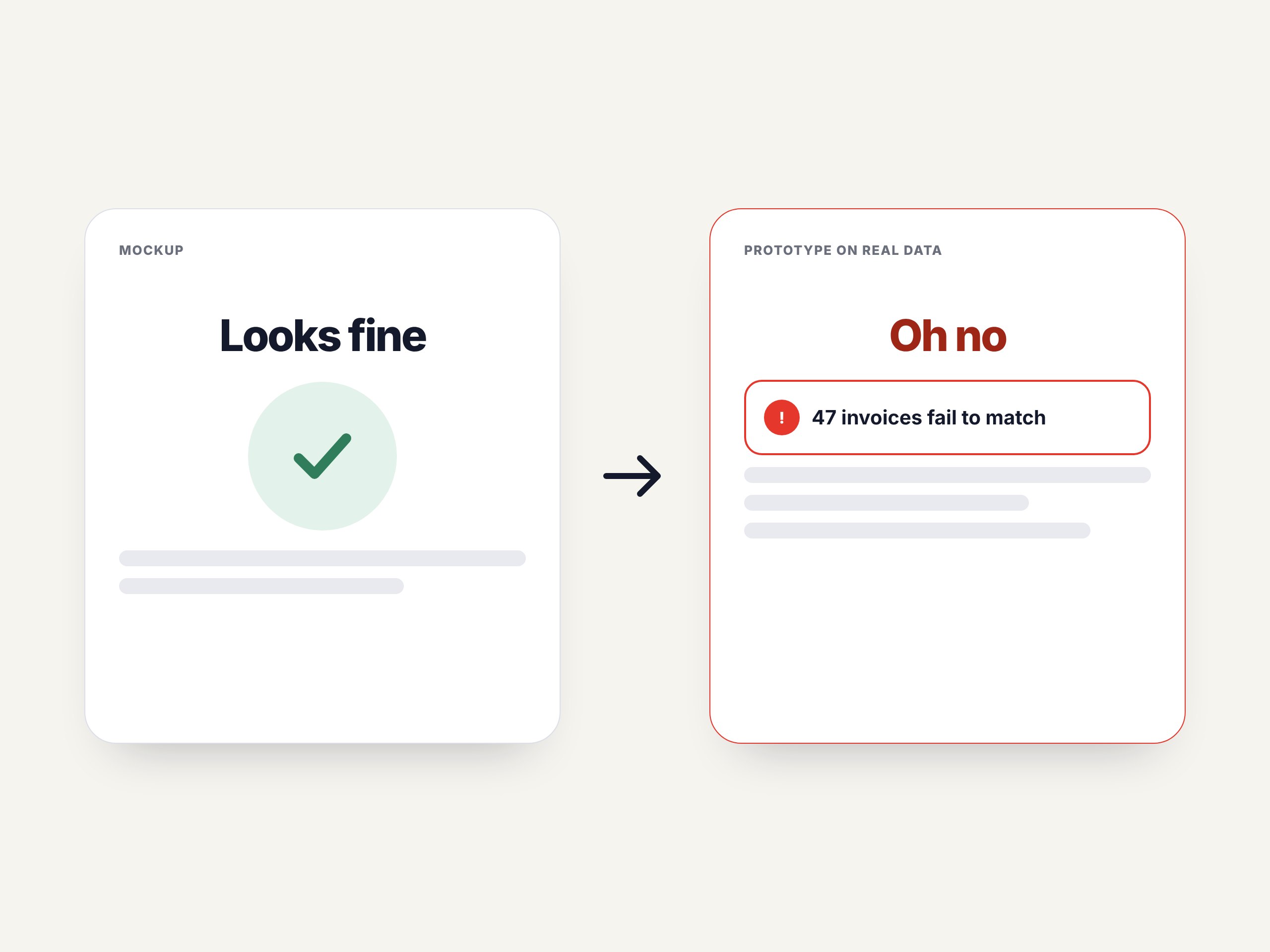
Through 2024 the work shifted from drafting to building. With an AI editor and, from June, tools that could produce a working interface from a description, I stopped making static mockups for most things. A mockup tells you whether someone likes a screen. A working prototype tells you whether they'd use it. I found that out the expensive way on a ticketing project, when a quick prototype told me everything was fine and a slower one, built on each customer's real data, told me it wasn't.
So the second rule: if the question is about trust or behavior, the first prototype should be able to fail the way the real product would. Anything lower-fidelity gives you false comfort faster.
2025: shipping
In 2025, agentic coding tools made it practical for me to ship changes myself. Small ones at first: copy, defaults, tokens. I opened pull requests like anyone else and they were reviewed like anyone else's, and I think that's the right way to do it. It's the reason I've never wanted a back door.
What surprised me was how much the design of a change mattered more than the change. The tool will write whatever you describe. So the work moved toward describing things precisely and checking the result against rules I could state: use tokens, not values; use existing components first; say what you're unsure about. The first bad pull request on my team came from a designer who trusted the tool without asking for those things. I wrote a checklist the following week.
2026: exploring
By this spring, tools for visual exploration, like Claude Design, had become good enough that I use them at the start of a project, to see many directions quickly, and then leave them. They're good at producing options. They're not good at telling you which option is true for a particular customer, and I've noticed that the faster options get produced, the more tempting it is to skip that question.
What I don't hand over
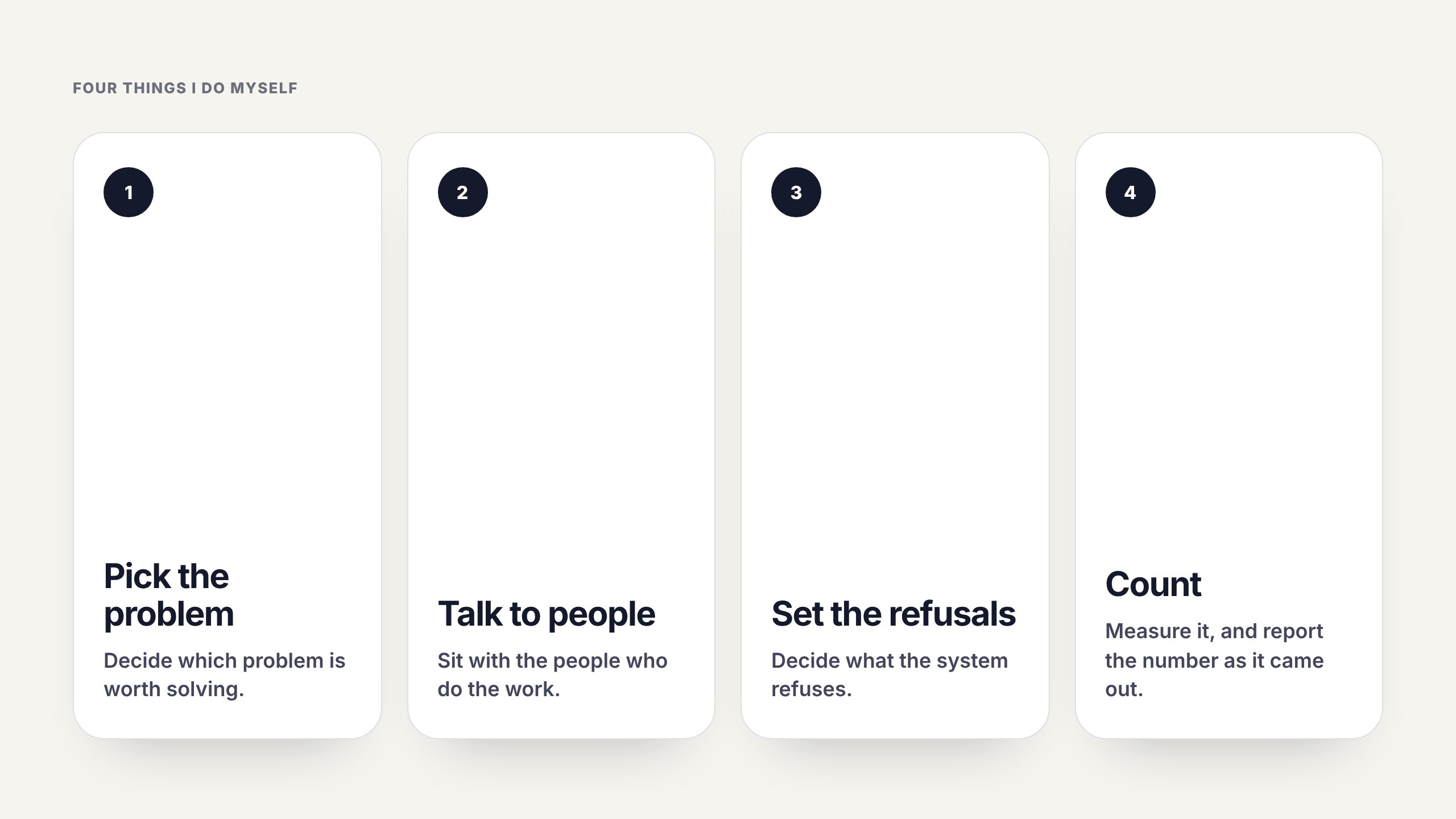
There are four things I do myself, whatever the tool can do.
I decide which problem is worth solving. A model can sort a backlog or rank a list of complaints. It can't tell me that the thing everyone is asking for isn't the thing they need. That judgment is the job, and I'm increasingly suspicious of work that skips it.
I talk to the people. Reading recordings and notes is useful and I'll keep doing it, but twelve sessions I watched with the sound on taught me something forty sessions a model summarized never would.
I decide what the system refuses. When I design anything with a model in it, I spend more time on what it should say no to than on what it should do. The refusal is the product's character.
And I count. Not estimates. Counted numbers, from a repository or a log, because it's the only argument that survives an executive asking "how do you know?"
What I'd tell a designer starting now
Learn to build. Not to become an engineer, but because a prototype that runs is worth ten that don't, and because the people you're trying to persuade have stopped being moved by pictures.
Then learn the opposite habit: stop. Every tool is faster than your judgment, and the gap between those two speeds is where mistakes are made.