


Building a Reason to Stay
I spent a lot of time looking at a chart that showed a massive cliff. People would sign up, work really hard to build something they were proud of, and then the second they hit publish, they would leave and never come back. It felt like we were building a product that people only wanted to use once, like a rental car or a hotel room.
I wanted to find out why they didn't see a reason to stay.
The outcome
We shifted the focus from just getting people through the door to helping them build something that actually lasted. It wasn't about tricks to keep them clicking; it was about making the work they did feel more valuable over time.
- 24% reduction in churn. We measured this by looking at the number of users who started a second project within six months of finishing their first. Previously, that number was almost zero.
- 14% increase in annual revenue. This happened because more people felt comfortable moving to a yearly plan once they realized they would be using the tool as a regular part of their job, rather than just for a one-off task.
- More people working together. We saw a significant jump in the number of "seats" per account. Instead of one person struggling alone, we made it easier to bring in a teammate, which meant the product became a shared habit.
"Metrics show you where people are getting stuck, but they can't tell you how discouraged they feel."
It was a lonely experience
When I talked to users, I kept hearing the same thing: they felt like they were in an exclusive club where they didn't quite know the password. If they made a mistake with their data or a technical error popped up, they didn't see it as a puzzle to solve. They saw it as a sign that they weren't "techy" enough to be using the platform.
Because it was just them against the software, the weight of getting it right was heavy. Once they finished a project, the relief was so great that they just wanted to walk away. They didn't feel like they were part of a community; they felt like they had just finished a difficult chore.
How we changed the conversation
I focused on a few shifts that were less about "features" and more about how the product felt to use.
First, I looked at the upgrade prompts. They used to be loud and frequent, appearing whenever we wanted more money. I changed them to be quiet and contextual. If someone reached for a tool they didn't have access to—like a specific way to organize their data—we would offer a trial right then and there. It felt like a helping hand rather than a sales pitch.
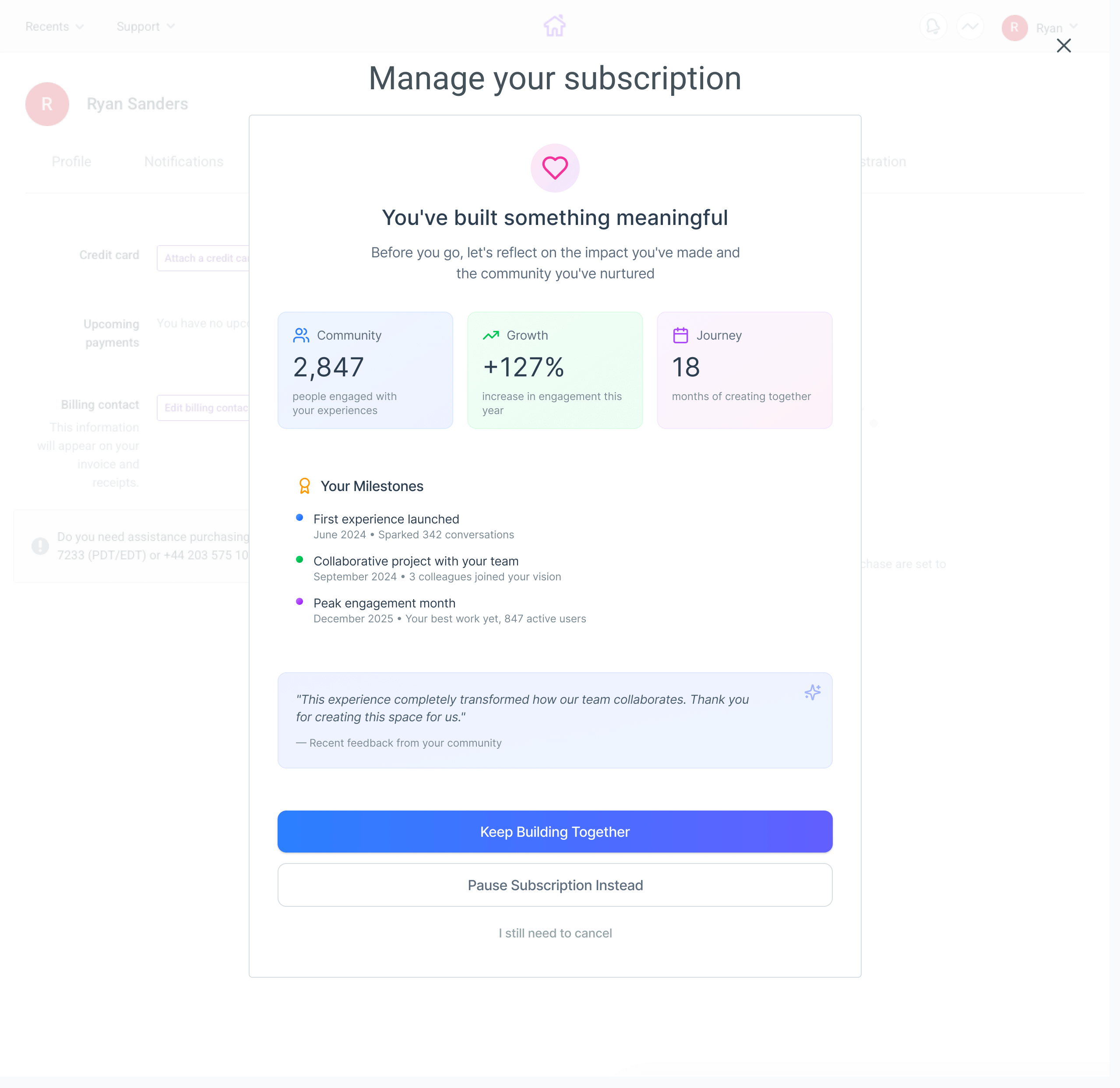
Next, I made it easier to bring other people in. We realized that the best time to invite a colleague wasn't during setup, but right after a small win. When someone successfully uploaded their first list, we’d suggest they share the progress with a teammate. It turned a solitary task into a shared project.
"The product felt like an exclusive club where the door slammed shut the moment you finished your first project."
Where I overthought it
I initially tried to build a complex social feed within the product. I thought if people could see what others were building, they would feel inspired to stay. I spent weeks on a "discovery" page that showed off beautiful projects from other users.
It was a total miss. Our users didn't want to see how much better everyone else was; it actually made them feel more intimidated. It reinforced that feeling of not belonging. I had to learn that "social" doesn't always mean a feed or a comment section. In this case, it just meant not being the only person responsible for the work. I scrapped the feed and focused entirely on internal collaboration.
"We replaced the loud sales pitches with quiet invitations."
What I'm still thinking about
We solved the immediate churn, but I’m still curious about the "off-season." For users who only have one big event a year, how do we provide value in the eleven months in between? I’m looking at ways to help them use their data to plan for the future, so the tool stays relevant even when they aren't actively building.